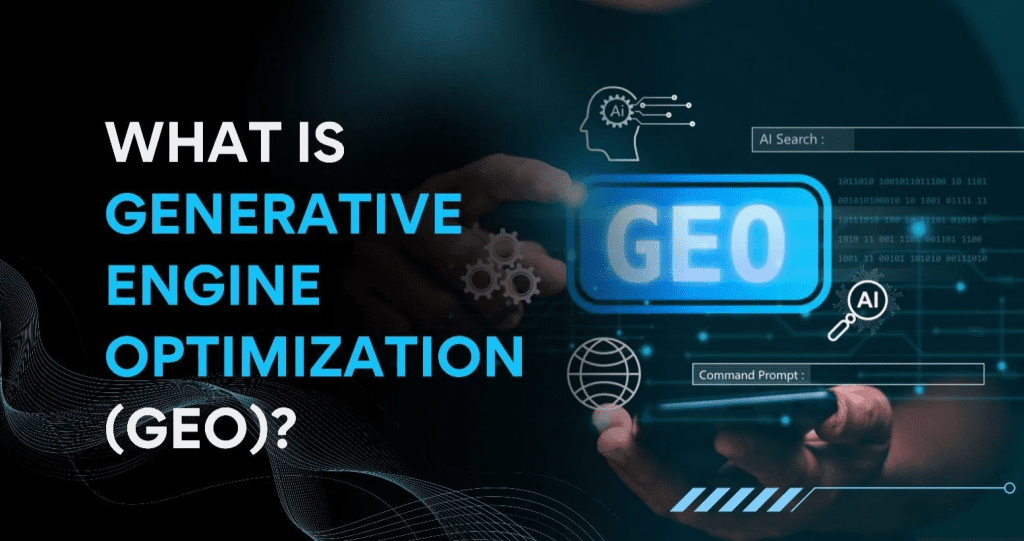
Generative Engine Optimization (GEO) is the strategic practice of optimizing digital content to rank prominently within generative AI-driven search platforms like ChatGPT, Google’s Search Generative Experience (SGE), Gemini (formerly Bard), Bing Chat, and Perplexity. In simple terms, What is Generative Engine Optimization refers to optimizing content so it can be selected, summarized, and cited by AI systems.
Unlike traditional SEO, which optimizes for static search engine results pages (SERPs), GEO aims to influence how AI answers are generated, selected, and cited in response to complex queries. It’s about visibility in answer engines, not just ranking in link-based search results.
What Is Generative Engine Optimization Doing for Businesses Today
When businesses truly grasp what is Generative Engine Optimization and implement it effectively, the results can be transformative. Companies that optimize for generative AI engines are seeing their brand mentions increase across AI platforms, establishing themselves as industry thought leaders without relying solely on traditional traffic metrics. What is Generative Engine Optimization delivering in practical terms? It’s giving businesses a competitive advantage by ensuring their expertise, products, and solutions are recommended by AI assistants to millions of users daily. Even if users never visit your website directly, your brand gains credibility and top-of-mind awareness when AI consistently cites your content as authoritative. This creates a powerful form of digital word-of-mouth marketing at scale, building trust with potential customers before they even know they need your solution.
GEO vs. SEO: Similarities and Differences
How is GEO Similar to SEO?
- Focus on relevance: Both prioritize content that aligns with user intent.
- Technical quality matters: Site speed, mobile responsiveness, and schema still support performance.
- Content strategy is foundational: Both rely on comprehensive, authoritative content to succeed.
How is GEO Different from SEO?
| GEO | Traditional SEO |
| Optimizes for AI-generated responses | Optimizes for link-based SERPs |
| Prioritizes contextual understanding | Prioritizes keyword matching |
| Emphasizes long-form, semantic-rich content | Often targets keyword density & structure |
| Targets answer engines like ChatGPT | Targets Google/Bing search results |
| Relies on AI training signals | Relies on crawler-based indexing |
Integrating GEO with SEO
Rather than replacing SEO, GEO enhances it. Together, they provide a dual advantage: visibility on both traditional and AI-powered search fronts.
Strategies for Combining GEO and SEO:
- Repurpose top-performing SEO content into AI-friendly formats.
- Use structured data and schema to support factual AI citations.
- Focus on experience, expertise, authority, and trustworthiness (E-E-A-T) to boost credibility.
- Optimize for featured snippets, FAQs, and summary blocks that feed into AI engines.
Why GEO Matters
The Evolution of Search Behavior
Users are increasingly seeking direct answers from conversational platforms. They want comprehensive, single-session answers—not a list of clickable links.
Impact on Organic Search
As answer engines rise, traditional organic CTRs may decline. GEO ensures your brand continues to surface in AI responses—even without users clicking through to a site.
What Are the Benefits of GEO?
- Brand visibility in AI answers
- Higher trust and authority perception
- Increased engagement from long-tail and complex queries
- Future-proofing against declining SERP visibility
GEO Benefits in Action:
A company that consistently publishes informative, sourceable content (e.g., how-to guides, FAQs, definitions) is more likely to be cited or summarized in generative engine outputs.
How Does GEO Work?
1. Generative AI Research and Analysis
Understand what topics and questions your audience asks AI tools. Use platforms like Perplexity, ChatGPT, or SGE to explore phrasing and intent.
2. Content Quality and Relevance
Generative engines favor in-depth, well-structured content that directly addresses user queries. Think natural language, clarity, and topic depth.
3. Content Structure and Clarity
Use clear subheadings, semantic HTML tags, and bullet points to enhance AI parsing.
4. Content Distribution and Engagement
While generative engines can pull from anywhere, high-authority signals—such as backlinks and social shares—improve visibility.
5. Brand Authority and Credibility
Build your brand’s E-E-A-T by showcasing authorship, credentials, and real-world trust signals.
6. Technical SEO Foundations
Maintain a fast, accessible, and crawlable website. Include schema markup for structured content.
7. Experiment and Iterate
Monitor which pieces of your content get cited or ranked by AI engines. Tweak formats, tone, and topics accordingly.
8. GEO is Ongoing
As AI evolves, so will its selection criteria. GEO is a long-term strategic discipline, not a one-time optimization.
Key GEO Ranking Factors
- Topic authority and topical depth
- Natural, human-readable tone
- Long-form, multi-intent content
- Internal linking for semantic clusters
- Answer engine citations and mentions
Practical GEO Implementation Tips
- Use tools like ChatGPT or Perplexity to reverse-engineer answer-friendly content.
- Write content that answers multiple related questions in a single page.
- Add summaries, definitions, and step-by-step guides to increase citation potential.
- Leverage multimedia (images, video, transcripts) to support multimodal AI.
Future of SEO with GEO
As search moves from “10 blue links” to AI conversations, marketers must adapt. GEO represents the next evolution of digital visibility—ensuring your brand is found, quoted, and trusted in AI-driven ecosystems.
Key Takeaway
GEO isn’t just a buzzword—it’s a fundamental shift in how visibility is earned in a world dominated by AI-generated answers. If SEO helped users find your content, GEO helps AI choose your content to represent the truth.
Ready to Implement GEO?
To succeed in this next era, marketers must evolve alongside search technology. Embrace GEO, integrate it with your SEO strategy, and position your content where today’s (and tomorrow’s) searchers are looking.
Frequently Asked Questions
Q: What is Generative Engine Optimization in simple terms?
A: What is Generative Engine Optimization? In simple terms, GEO is the practice of optimizing your content so that AI-powered search engines like ChatGPT, Google’s SGE, Gemini, and Perplexity can easily find, understand, and cite your content when generating answers to user queries. Unlike traditional SEO that focuses on ranking in search results, GEO ensures your content becomes the authoritative source that AI uses to answer questions directly.
Q: How is what is Generative Engine Optimization different from traditional SEO?
A: While traditional SEO optimizes content to rank high in search engine results pages (SERPs), what is Generative Engine Optimization focuses on is making your content the preferred source for AI-generated answers. GEO emphasizes semantic richness, contextual understanding, and structured data that AI can easily parse and cite, rather than just keyword density and backlink counts. However, both strategies complement each other and should be used together for maximum visibility.
Q: Do I need to abandon SEO if I learn what is Generative Engine Optimization?
A: Absolutely not. Understanding what is Generative Engine Optimization doesn’t mean abandoning traditional SEO—it means enhancing it. GEO builds on SEO foundations like quality content, technical optimization, and E-E-A-T principles. The most successful digital marketing strategies in 2026 integrate both approaches: SEO captures users who click through traditional search results, while GEO ensures your brand appears in AI-generated answers. Think of GEO as the evolution of SEO, not its replacement.
Q: What is Generative Engine Optimization’s impact on website traffic?
A: What is Generative Engine Optimization doing to website traffic is complex. While GEO may reduce direct click-throughs since AI answers questions without requiring users to visit websites, it significantly increases brand visibility, authority, and trust. When AI platforms consistently cite your content, you become a recognized industry authority, which leads to increased branded searches, higher conversion rates, and stronger customer trust—often more valuable than raw traffic numbers alone.
Q: How long does it take to see results from what is Generative Engine Optimization?
A: Results from implementing what is Generative Engine Optimization strategies typically appear within 3-6 months, though this varies based on your domain authority, content quality, and competition level. Unlike traditional SEO where you can track rankings daily, GEO results are measured through AI citation frequency, brand mentions in AI-generated responses, and increases in branded search queries. Consistent implementation of GEO best practices compounds over time, with exponential improvements as AI engines recognize your content authority.
Q: What is Generative Engine Optimization best suited for—B2B or B2C businesses?
A: What is Generative Engine Optimization works exceptionally well for both B2B and B2C businesses, though the approach differs slightly. B2B companies benefit from GEO by establishing thought leadership and getting cited for industry-specific queries, while B2C businesses gain visibility for product recommendations and how-to queries. Any business that can provide authoritative, helpful content answering user questions can benefit from GEO, regardless of their business model.
Dive Deeper: Our Best Link Building Tools For Beginners: Your Complete 2026 Guide