
I still remember the day I realized my competitor was ranking above me for our most important keyword. Their content wasn’t better. Their site wasn’t faster. But they had something I didn’t: powerful backlinks I was completely missing. That’s when I discovered Best Competitors Backlink Analysis Tools, and it changed everything.
Today, I’m going to show you the exact tools I use to spy on my competitors’ backlinks and steal their best link opportunities. Whether you’re an SEO pro or just starting, these tools will help you uncover hidden links that can push you past your competition.
Let’s dive in.
What Are the Best Competitors Backlink Analysis Tools and Why Do You Need One?
A backlink gap tool shows you which websites link to your competitors but not to you.
Think of it like this. Your competitor got mentioned on a popular industry blog. That blog links to them but hasn’t linked to you yet. That’s a gap. And it’s an opportunity.
These tools scan millions of backlinks across the web. They compare your link profile to your competitors. Then they create a list of sites you should target.
Here’s why this matters. Google uses backlinks as a form of a vote of confidence. More quality backlinks usually mean higher rankings. When your competitors have links you don’t, they have an advantage.
But here’s the good news. Those same sites that link to your competitors are likely to link to you, too. They already trust businesses in your space. You need to get on their radar.
How Backlink Gap Analysis Changed My SEO Strategy
Before I used gap analysis, I was guessing at link building. I’d search for random guest post opportunities and hope they worked.
After I started analyzing competitors, everything clicked. I found 40+ high authority sites linking to my competitors in just one week. I reached out to 15 of them. Eight responded. Five gave me links.
My rankings jumped from page 2 to the top 5 within 3 months.
That’s the power of knowing exactly where to focus your efforts.
How to Analyze Competitor Backlinks Step by Step?
Let me walk you through my exact process. I do this every month for my clients and my own sites.
Step 1: Identify Your Real Competitors
Don’t just pick random sites in your niche. Find the ones actually competing with you in search results.
Go to Google—type in your primary keyword. Look at who ranks on page one. Those are your search competitors, not just your business competitors.
Use tools like Semrush or Ahrefs to find keyword overlap. These tools show you the domains’ rankings for the exact keywords you’re targeting.
Write down 3 to 5 competitors. More than that gets messy. Less than that misses opportunities.
Step 2: Pull Their Backlink Data
Now plug those competitor URLs into a backlink gap tool. Most tools let you compare up to 5 domains at once.
The tool will crawl through its database. It checks millions of backlinks. Then it creates a report showing:
- Sites linking to competitors but not you
- How many backlinks does each competitor have
- The quality of those backlinks (domain authority, spam score, etc.)
- Shared backlinks (sites linking to multiple competitors)
Step 3: Filter for Quality Opportunities
Here’s where most people mess up. They see thousands of backlinks and don’t know where to start.
Filter your results. Focus on:
- Domain Rating (DR) or Domain Authority (DA) above 30
- Dofollow links (these pass SEO value)
- Sites in your niche or related industries
- Recent backlinks (within the last 6 months)
Ignore sites with high spam scores. They’ll hurt more than help.
Step 4: Find Patterns in Their Link Building
Look at where competitors get their links. Do they:
- Guest post on specific blogs?
- Get mentioned in resource lists?
- Appear in industry roundups?
- Have links from tool directories?
These patterns reveal their strategy. More importantly, they show you the exact path to follow.
Step 5: Create Your Outreach List
Export the filtered backlinks. Create a spreadsheet with:
- Website URL
- Contact email (use Hunter.io or similar tools)
- Why they might link to you
- Personalized pitch angle
Don’t send generic emails. Reference their existing content. Explain why your resource adds Value for its readers.
Common Mistakes to Avoid During Backlink Analysis
I’ve seen people waste weeks on bad link prospects. Here’s what NOT to do:
Chasing Every Single Link: Just because a competitor has a link doesn’t mean you need it. Some links don’t matter. Focus on quality over quantity.
Ignoring Relevance: A link from a cooking blog won’t improve your SaaS tool’s ranking. Stay in your lane.
Forgetting About Link Velocity: If you suddenly get 100 backlinks in a week, Google might flag it as suspicious. Build links gradually.
Not Checking for Toxic Links: Some competitor links come from spammy sites. Don’t copy those. They’ll hurt your rankings.
Which Tool Is Best for Competitor Backlink Analysis?
I’ve tested dozens of tools over the years. Here are the ones I actually use and recommend.
1. Ahrefs: The Industry Standard

Ahrefs has the second-largest backlink database on the web. Over 35 trillion links updated every 15 minutes.
Their Content Gap tool is my favorite. You enter your URL and up to 10 competitors. Within seconds, you see thousands of backlink opportunities.
What I Love:
- Clean interface that’s easy to navigate
- Accurate data that matches what I see in Google Search Console
- Detailed metrics for every backlink
- Historical backlink data shows link-building trends
What Could Be Better:
- Expensive for beginners ($129/month minimum)
- It can be overwhelming with too much data
- No free trial (just a 7-day trial for $7)
Best For: SEO agencies, in-house teams, and serious SEO professionals who need reliable data.
2. Semrush: All-in-One SEO Suite
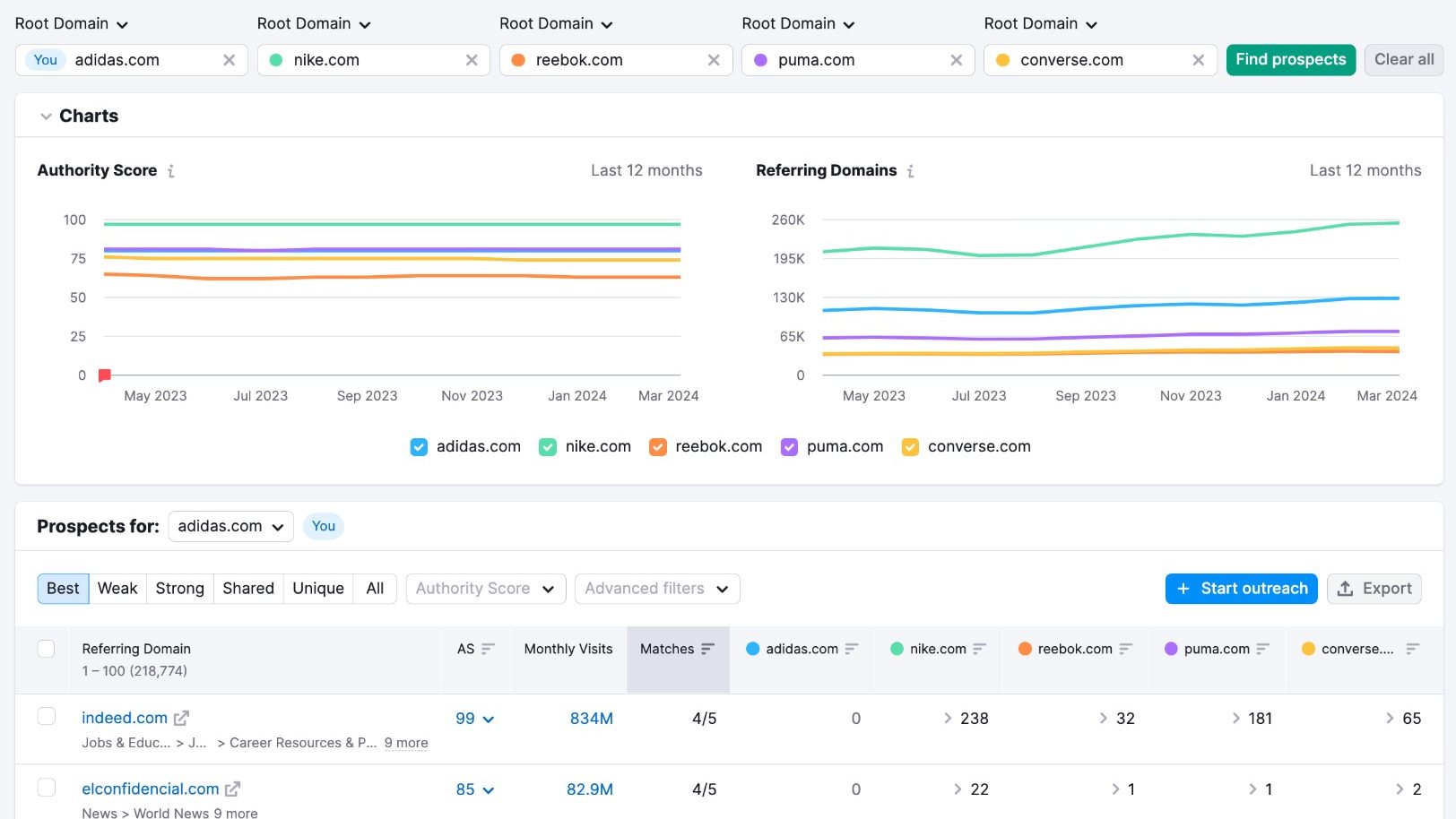
Semrush isn’t just for backlinks. But their Backlink Gap tool is powerful.
They claim to have the largest backlink database at 43 trillion links. I can’t verify that, but their data is solid.
What I Love:
- Compare up to 5 domains side by side
- An interactive Venn diagram shows link overlaps
- Filters by link type (dofollow/nofollow)
- Includes Authority Score for prioritizing prospects
What Could Be Better:
- Interface feels cluttered at times
- Results can include irrelevant domains
- Pricing starts at $139.95/month
Best For: Digital marketing agencies running multi-client audits who need backlink analysis plus keyword research and site audits.
3. Moz Link Explorer: Great for Beginners
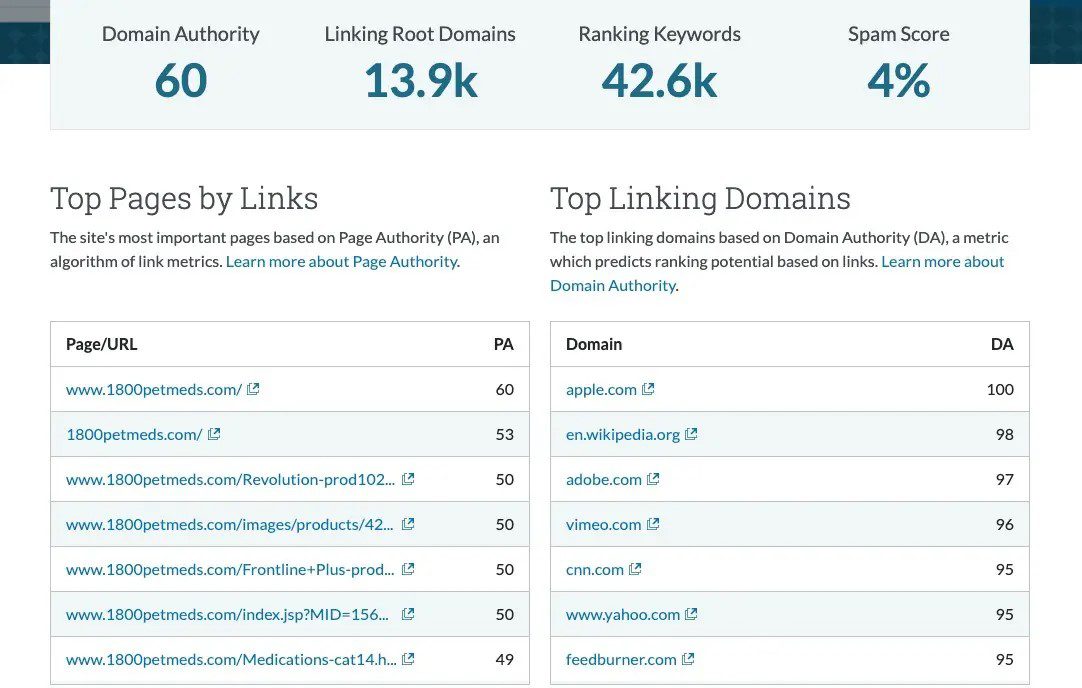
Moz created Domain Authority (DA), which everyone uses now. Their Link Explorer tool is beginner-friendly.
Their Link Intersect feature works just like Ahrefs and Semrush. You enter competitors and find gap opportunities.
What I Love:
- Simple interface perfect for beginners
- Domain Authority and Page Authority metrics
- Spam Score helps avoid toxic links
- Free version available (limited to 10 queries per month)
What Could Be Better:
- Smaller backlink index than Ahrefs or Semrush
- Slower crawl speed
- Advanced features require Pro plan ($99/month)
Best For: Small business owners and freelancers just getting started with competitor analysis.
4. Majestic: Trust and Citation Flow Experts
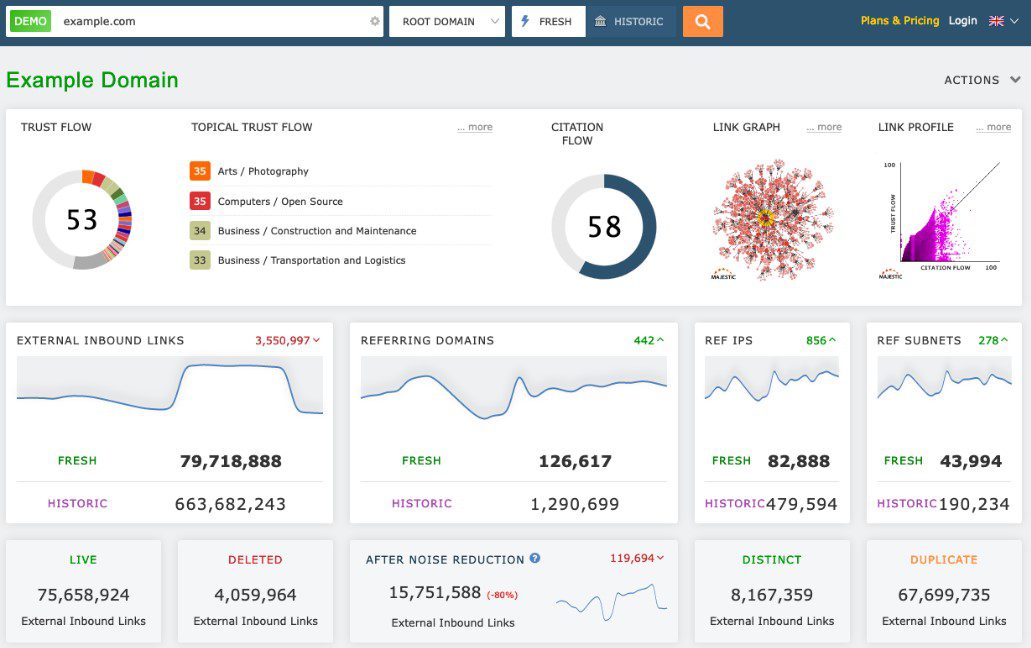
Majestic focuses on backlink trust metrics. Their Trust Flow and Citation Flow scores are unique.
They don’t have a traditional “gap” tool. But their Site Explorer lets you compare backlink profiles manually.
What I Love:
- Trust Flow helps identify high-quality links
- Historic Index shows backlink history over time
- One-time purchase option (not just subscription)
- Affordable at $49.99/month
What Could Be Better:
- Less intuitive than competitors
- Requires manual comparison for gap analysis
- Smaller database than Ahrefs or Semrush
Best For: SEO professionals focused on link quality over quantity and anyone wanting to avoid monthly subscriptions.
5. Ubersuggest: Budget-Friendly Option
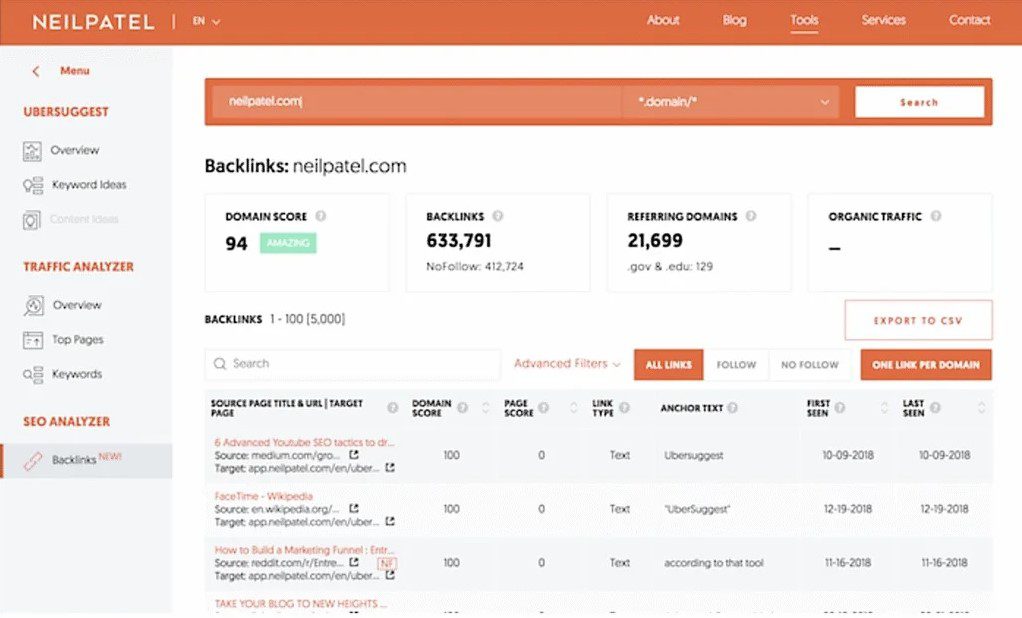
Neil Patel’s Ubersuggest offers backlink analysis at a fraction of the cost.
Their Backlink Data tool shows which sites link to your competitors. It’s not as detailed as premium tools, but it works.
What I Love:
- Only $29/month (or $290 for lifetime access)
- Clean, simple interface
- Decent backlink database
- Includes keyword research and content ideas
What Could Be Better:
- A smaller database means missing backlinks
- Less detailed filtering options
- Limited to 3 competitors at once
Best For: Beginners, solopreneurs, and anyone on a tight budget who still wants competitor insights.
6. SE Ranking: Hidden Gem for Agencies
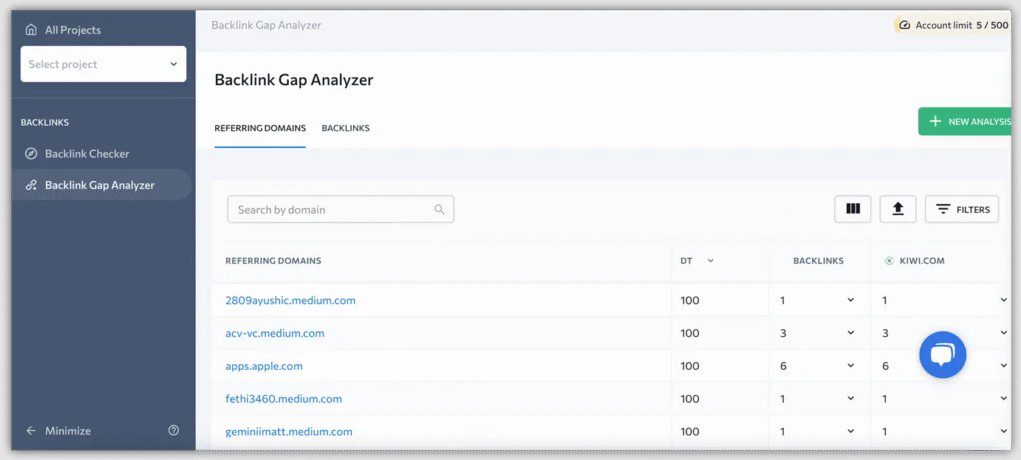
SE Ranking flies under the radar, but their Competitor SEO/PPC Research tool is solid.
You can track competitor backlinks over time and get alerts when they gain or lose links.
What I Love:
- Affordable pricing starts at $55/month
- Tracks competitor backlink velocity
- White label reports for agencies
- All-in-one platform with rank tracking and audits
What Could Be Better:
- Smaller database than the top competitors
- The interface could be more modern
- Slower data updates
Best For: Digital marketing agencies needing client reports and ongoing competitor monitoring.
7. SpyFu: SEO and PPC Combined
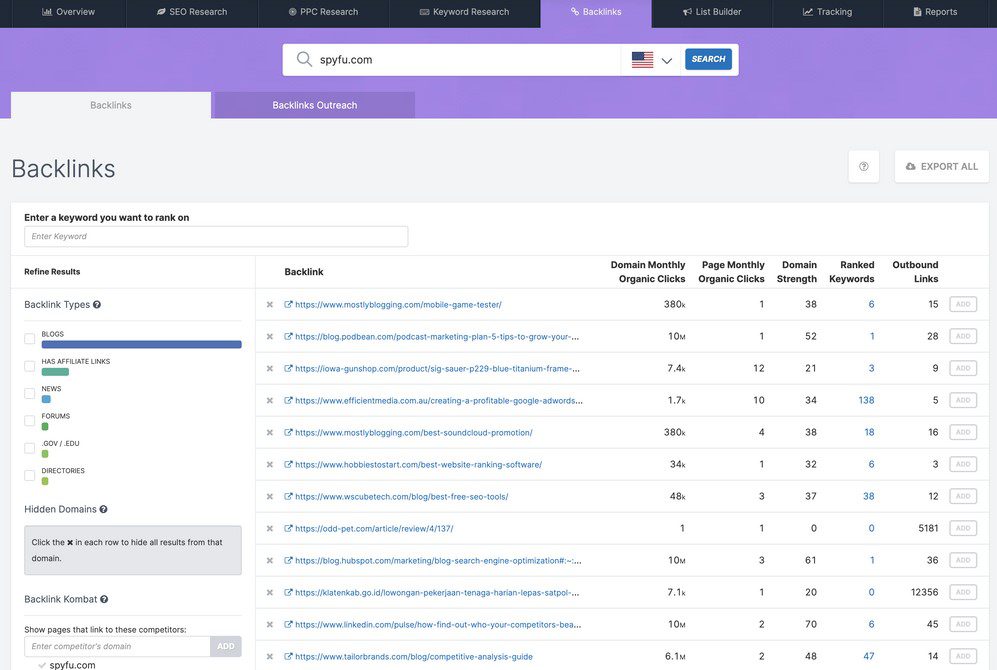
SpyFu specializes in competitive intelligence. Their backlink tools work alongside PPC research.
You can see every backlink your competitor has ever had, going back years.
What I Love:
- Historical backlink data (super helpful)
- Shows lost backlinks competitors used to have
- Combines SEO and PPC competitor data
- Domain comparison features
What Could Be Better:
- Focus on U.S. data (international limited)
- Not as many backlinks as Ahrefs or Semrush
- Pricing at $39/month (basic features)
Best For: Businesses running both SEO and PPC campaigns who want combined competitive insights.
What Are the Best Free Competitor Analysis Tools?
Not everyone can afford $100+ per month for SEO tools. I get it.
Here are legitimate free options that actually work.
Google Search Console: Your Starting Point
Google Search Console (GSC) shows you every backlink Google knows about to your site. It’s free, and it’s official.
How to Use It:
- Add your site to GSC (if you haven’t already)
- Go to the Links section in the left menu
- Click “More” under External Links
- Export the list
The Catch: GSC only shows YOUR backlinks. You can’t see competitor data. You’ll need to use it alongside other free tools.
Backlink Checker by Backlinko (Powered by Semrush)
Backlinko offers a free backlink checker using Semrush’s database. You get limited results, but it’s a start.
Enter any URL and see:
- Total backlinks
- Referring domains
- Authority Score
- Sample backlinks
The Limit: You only see a small sample. For complete data, you need Semrush.
Ubersuggest Free Version
Ubersuggest has a freemium model. You get three free searches per day without an account.
This lets you quickly check a competitor’s backlink profile. See their top referring domains and total backlinks.
The Limit: Limited daily searches and fewer features than the paid version.
Moz Link Explorer Free
Moz gives you 10 free queries per month. That’s enough to check your top competitors once.
You’ll see Domain Authority, spam score, and sample backlinks.
The Limit: Only 50 backlinks shown per query. Full results require Moz Pro.
SEO Review Tools Backlink Checker
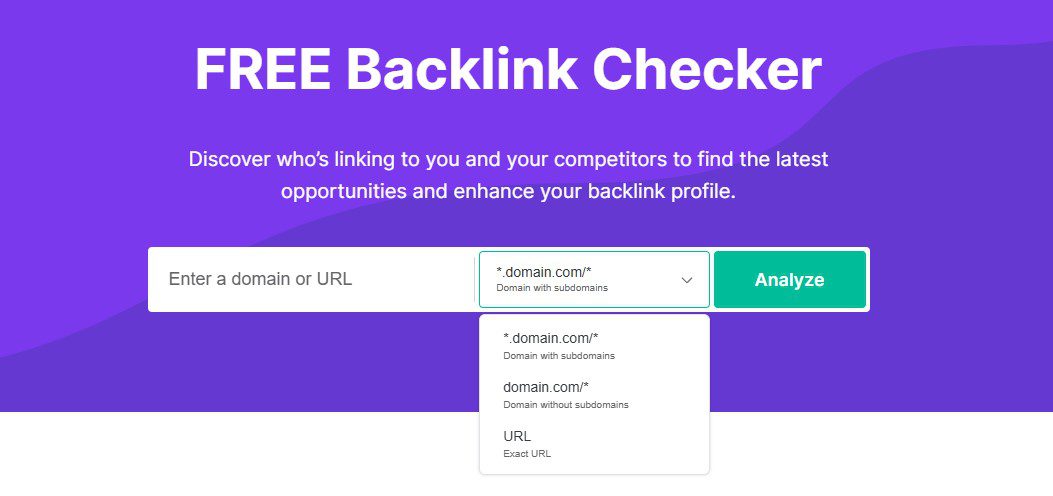
This completely free tool doesn’t require a sign-up. Just enter a URL.
You’ll get basic backlink data, including:
- Total backlinks
- Referring domains
- Anchor text distribution
The Limit: A Smaller database means it misses some backlinks. Good for quick checks, not deep analysis.
Pro Tip: Rotate between these free tools. Check one competitor in Moz, another in Ubersuggest, and so on. You’ll build a decent picture without paying anything.
How Do Backlink Gap Tools Actually Work?
Understanding the technology helps you use these tools better.
The Crawler Process
Backlink tools use web crawlers (also called spiders or bots). These crawlers browse the internet 24/7, just like Google’s crawler.
Every time they find a link from Site A to Site B, they record it in a massive database. Premium tools like Ahrefs crawl billions of pages daily.
Database Size Matters
The bigger the database, the more backlinks a tool can find.
- Ahrefs: 35+ trillion backlinks
- Semrush: 43+ trillion backlinks
- Moz: Smaller but still substantial
A tool can only show you backlinks it knows about. This is why using multiple tools sometimes reveals different results.
The Comparison Algorithm
When you run a backlink gap analysis, here’s what happens:
- Tool pulls all backlinks for your domain
- Tool pulls all backlinks for competitor domains
- The algorithm compares the lists
- It identifies referring domains that link to competitors, but not you
- Results are ranked by relevance, authority, and other metrics
Update Frequency
Backlink profiles change constantly. Sites add new links, remove old ones, or change link types.
Top tools update their databases every 15 to 30 minutes. Budget tools update weekly or monthly.
Fresh data means better opportunities.
Can You Use Multiple Backlink Analysis Tools Together?
Short answer: Yes. And you probably should.
No single tool has a complete picture of every backlink on the web. Each tool’s crawler has gaps.
My Multi-Tool Strategy
Here’s what I do for essential projects:
Primary Tool (Ahrefs): I use this for my primary analysis. It’s my daily driver.
Secondary Check (Semrush): I run the same competitor analysis in Semrush. This usually reveals 10-20% more opportunities that Ahrefs missed.
Quality Verification (Moz): I check Domain Authority and spam scores in Moz for prospects I’m unsure about.
Free Tool Spot Checks: I occasionally use free tools to verify suspicious results.
When Multiple Tools Disagree
Sometimes Ahrefs shows 5,000 backlinks while Semrush shows 7,000 for the same domain.
Why?
- Different crawl schedules
- Different database sizes
- Different ways of counting (do they count internal links? Redirects?)
Use the tool that’s most consistent for your needs. Focus on trends, not exact numbers.
How Often Should You Run Competitor Backlink Analysis?
Backlink profiles don’t change overnight. But you shouldn’t wait forever either.
My Recommended Schedule
Monthly Analysis: For competitive niches where rankings shift often. Check your top 3 competitors monthly.
Quarterly Deep Dives: For stable industries. Do a thorough analysis every 3 months.
Weekly Monitoring: Set up alerts in your backlink tool. Get notified when competitors gain or lose primary links.
After Major Algorithm Updates: Google updates can shift rankings. Check what changed in top-ranking backlink profiles.
What to Track Over Time
Create a simple spreadsheet tracking:
- Total referring domains (yours vs competitors)
- New backlinks gained this period
- Lost backlinks this period
- Domain Rating or Authority Score changes
This helps you see if your link building is closing the gap or falling behind.
What Makes a Good Backlink Opportunity Worth Pursuing?
Not all backlinks are created equal. Here’s how I evaluate opportunities.
Domain Authority and Trust
Look at these metrics:
- Domain Rating (Ahrefs) or Domain Authority (Moz) above 30
- Trust Flow (Majestic) is higher than Citation Flow
- Low spam score (under 5%)
High authority sites pass more SEO value.
Relevance to Your Niche
A link from a high authority site in a completely different industry doesn’t help much.
Prioritize sites that:
- Cover topics related to yours
- Target similar audiences
- Operate in your industry or adjacent ones
Google values relevant links more.
Traffic Potential
Some backlinks send actual visitors, not just SEO juice.
Check the site’s traffic in Semrush or Ahrefs. If they get 50,000+ monthly visitors, a link could send you referral traffic.
Link Placement
Where the link appears matters:
Best: Editorial links in main content (highest Value)
Good: Resource pages, recommended tools lists
Okay: Blog sidebars, footer links
Avoid: Sitewide footer links (often seen as spammy)
Dofollow vs Nofollow
Dofollow links pass SEO value. Nofollow links don’t (technically).
But don’t ignore nofollow links completely. They still:
- Send referral traffic
- Build brand awareness
- Look natural in your link profile
A healthy link profile has both.
Pro Tip: If a site links to all your competitors with dofollow links, you should aim for dofollow too.
How to Turn Backlink Analysis Into Actual Links?
Finding opportunities is half the battle. Getting the links is the other half.
Outreach That Actually Works
I’ve sent thousands of outreach emails. Here’s what I learned.
Personalize Every Email: Reference their specific content. Show you actually visited their site.
Provide Value First: Don’t just ask for a link. Offer something useful (an improved resource, new data, expert quote).
Be Specific: Tell them exactly where your link fits. Make their job easy.
Follow Up: Most people won’t respond to your first email. Follow up once after 5 to 7 days.
Example Outreach Email
Subject: Quick question about your [Topic] resource
Hi [Name],
I came across your article on [Specific Article Title] while researching [Topic]—great breakdown of [Specific Point].
I noticed you linked to [Competitor Site] in your tools section. I recently published a similar resource that covers [Additional Value You Provide].
Here’s the link: [Your URL]
Would this be worth adding to your recommendations? Your readers would find the [Unique Angle] section particularly helpful.
Thanks for considering it!
[Your Name]
Alternative Link Building Strategies
If outreach feels too pushy, try these:
Digital PR: Create newsworthy content (original studies, surveys, industry reports) that journalists naturally want to cite.
Broken Link Building: Find broken links on sites that link to competitors. Suggest a replacement for your working resource.
Resource Page Link Building: Many sites have “useful resources” or “tools we love” pages. Get featured there.
Guest Posting: Write valuable content for sites already linking to competitors. Your author bio gets a link.
Should You Copy Your Competitors’ Exact Link Building Strategy?
This is a common question. The answer is: yes and no.
What to Copy
The Types of Sites: If competitors get links from industry directories, you should target directories too.
Content Formats: If their how-to guides attract links, create better how-to guides.
Outreach Channels: If they succeed with guest posts, try guest posting as well.
What NOT to Copy
Their Exact Links: Don’t reach out to the same 50 sites. Diversify your sources.
Their Timeline: They might have built links over the years. You can’t replicate that overnight.
Shortcuts They Took: Some competitors buy links or use other black hat tactics. Don’t copy those. They’ll backfire.
Build on Their Strategy
Think of competitor analysis as inspiration, not a blueprint.
Find what’s working in your niche. Then add your own twist. Create something better. Offer more Value.
That’s how you don’t just match competitors but surpass them.
What About Toxic Backlinks from Competitor Analysis?
Sometimes you’ll discover competitors have backlinks from questionable sites.
Red Flags to Watch For
- Extremely high spam scores (70%+)
- Links from obvious link farms
- Dozens of links from foreign gambling or adult sites
- Sitewide footer links from unrelated sites
Should You Avoid These Sites?
Absolutely. Just because a competitor has these links doesn’t mean they’re helping.
They might be:
- Old links from before Google’s algorithm improved
- Negative SEO attacks
- Mistakes the competitor hasn’t cleaned up yet
Don’t replicate their bad links.
How to Check for Toxic Links
Use these tools:
- Semrush Backlink Audit (automatically flags toxic links)
- Moz Spam Score
- Ahrefs toxic link filter
- Google’s Disavow Tool (for removing bad links)
Focus on quality over quantity. One good link beats 100 spammy ones.
Are AI Tools Changing Backlink Analysis?
AI is creeping into SEO tools. Here’s what’s actually useful.
AI-Powered Features I Use
Automatic Prioritization: Some tools use AI to rank link opportunities by likelihood of success. This saves hours of manual filtering.
Content Gap Identification: AI analyzes competitor content and suggests what topics you’re missing. This goes beyond just backlinks.
Predictive Link Building: Tools like Semrush use AI to predict which domains are most likely to link to you based on historical data.
Spam Detection: AI gets better at identifying unnatural link patterns that humans might miss.
What AI Can’t Replace (Yet)
AI can’t:
- Build relationships for you
- Write personalized outreach emails that feel human
- Understand industry nuances and context
- Make final decisions about which opportunities to pursue
You still need human judgment. AI is a tool, not a replacement.
How Do Backlink Analysis Tools Handle Different Industries?
I’ve done backlink analysis for local businesses, SaaS companies, e-commerce stores, and blogs. Each works differently.
Local Businesses
Local companies often have:
- Fewer total backlinks
- More local directory links
- Citations from local news sites
- Links from the Chamber of Commerce and local associations
Focus On: Local competitors only. National competitors won’t have relevant backlinks for you.
E-Commerce Sites
Online stores typically get:
- Product review links
- Affiliate links
- Mentions on deal sites
- Links from shopping comparison sites
Focus On: Product-specific backlinks and category pages, not just homepage links.
SaaS and B2B Companies
Software companies often have:
- Tool directory listings
- Comparison and alternative pages (like “Best [Tool] Alternatives”)
- Review sites like G2, Capterra, TrustRadius
- Industry blog mentions
Focus On: Category-specific resource pages and SaaS directories.
Blogs and Content Sites
Publishers usually get:
- Guest post bio links
- Mentions from other bloggers
- Social media shares (some become links)
- Links from content aggregators
Focus on: Content quality and shareability rather than just outreach.
Tailor your strategy to your industry. What works for e-commerce won’t work for local contractors.
Ready to Find Your Missing Backlinks with The Tool Marketer?
You now have everything you need to find the backlinks your competitors have, and you don’t.
But here’s the thing. Knowledge without action is useless.
Pick one tool from this list. Start with a free option if the budget is tight. Run your first backlink gap analysis this week.
Find your top 3 competitors. Export their backlinks. Create a target list of 20 sites.
Then reach out to just 5 of them. Personalize each email. Offer real Value.
You’ll probably get 1 or 2 links from those first five emails. That’s normal. That’s progress.
Keep going. Check back monthly. Track your growth.
At The Tool Marketer, SEO shouldn’t be complicated or expensive. That’s why we test and review tools like these, so you spend less time researching and more time building.
Ready to level up your link-building game? Start your competitor backlink analysis today. Your rankings will thank you tomorrow.
Need more help choosing the right backlink tools for beginners? We’ve got you covered. We’ve also published detailed guides on backlink monitoring tools that help you track every link you build.
Your competitors won’t wait. Neither should you.
Frequently Asked Questions
What is the best free backlink analysis tool?
Google Search Console is the best free tool for tracking your own backlinks. For competitor analysis, try Ubersuggest’s free version (3 searches per day) or Backlinko’s free checker powered by Semrush. Moz Link Explorer also offers 10 free queries monthly.
How accurate are backlink analysis tools?
No tool is 100% accurate. Ahrefs and Semrush are considered the most reliable, catching about 70-80% of all backlinks. Free tools typically find 30-50%. Use multiple tools for critical analysis. Focus on trends rather than exact numbers.
Can backlink gap analysis hurt my SEO?
No, analyzing backlinks cannot hurt your SEO. It’s purely research. However, if you use this data to buy spammy links or employ black-hat tactics, it can harm your rankings. Stick to white hat outreach and quality link building.
How many competitor backlinks should I analyze?
Start with your top 3-5 direct competitors. Analyzing more than 10 competitors at once gets overwhelming and less actionable. Focus on quality competitors who rank for your target keywords, not just any site in your industry.
What’s the difference between backlink gap analysis and competitor analysis?
Backlink gap analysis focuses explicitly on finding backlink opportunities by comparing link profiles. Competitor analysis is broader and includes keywords, content, technical SEO, and more. Gap analysis is one tool within complete competitor analysis.
How long does it take to see results from backlink gap analysis?
Building backlinks takes time. After identifying opportunities, expect 2-4 weeks for outreach and responses. Then, 1-3 months before you see ranking improvements. Consistent monthly analysis and link building show results in 3-6 months.
Should I focus on dofollow or nofollow links?
Prioritize dofollow links as they pass SEO value. However, a natural link profile includes both types. Don’t ignore high-traffic nofollow links from authority sites. They still send referral traffic and build brand awareness.
What spam score is too high for a backlink?
Avoid sites with spam scores above 40% (in Moz) or 50+ out of 100 (in Ahrefs). Anything under 30% is generally safe. Between 30% and 40% require manual review. Check if the site looks legitimate and relevant before pursuing it.
Can small businesses compete with enterprise backlink profiles?
Yes, but differently. You won’t match Fortune 500 backlink counts. Instead, focus on niche-relevant, high-quality links. Target local links, industry-specific sites, and build relationships. Quality beats quantity for small businesses.
How much should I spend on backlink analysis tools?
Beginners can start with free tools or Ubersuggest ($29/month). Freelancers and small agencies typically invest $100-300/month for Ahrefs or Semrush. Large agencies may spend $500+ per month on premium plans with more queries and users.
Do I need technical skills to use backlink analysis tools?
No. Modern tools are beginner-friendly with visual dashboards. If you can use Google Docs, you can use Ahrefs or Semrush. The challenge is interpreting data and creating a strategy, not the technical usage of tools.
What’s the ROI of backlink gap analysis?
It varies by industry, but most businesses see 300-500% ROI from strategic link building. Finding 10 high-quality backlinks through competitor analysis might take 10 hours of work, but it will increase traffic by 20-30% over 6 months. That’s a significant Value for most businesses.