
Marketing automation isn’t just for big companies anymore. In 2026, even solo founders and small teams like us use smart software to send emails, track leads, and turn website visitors into paying customers—all without lifting a finger.
But here’s the problem: there are hundreds of tools out there. Some cost $10 per month. Others cost $10,000. Some are simple. Others need a tech degree to figure out.
This guide cuts through the noise. I’ll show you the 20 best marketing automation tools in 2026, teach you exactly what they do, compare prices, and help you find the perfect fit for your business—whether you’re running a startup, growing an agency, or managing enterprise campaigns.
Let’s dive in.
Table of Contents
What Is Marketing Automation and Why Does It Matter in 2026?
Marketing automation is software that handles repetitive marketing tasks for you. Instead of manually sending emails, posting on social media, or scoring leads, the software does it automatically based on triggers you set up.
Think of it like this: When someone downloads your free guide, the software automatically sends them a welcome email, adds them to your newsletter, notifies your sales team, and tracks what pages they visit. You set it up once, and it runs 24/7.
What Are Marketing Automation Tools?
Marketing automation tools are platforms that automate specific marketing tasks, such as email campaigns, social media scheduling, lead tracking, customer segmentation, and follow-up messages. They save time, reduce human error, and help you reach customers at exactly the right moment.
What Is Marketing Automation Software?
Marketing automation software is the broader category that includes these tools. It typically combines email marketing, CRM integration, analytics, workflow builders, and multi-channel communication (email, SMS, push notifications, chat) into one system.
Why Automation Matters with AI and Omnichannel Marketing
In 2026, customers interact with brands across 8 to 10 different channels before buying. They check your website, read emails, browse social media, chat with support, and compare prices on mobile apps.
Managing all these touchpoints manually? Impossible.
Modern marketing automation platforms now use AI to predict what customers want next, personalize content automatically, and optimize send times without guesswork. AI can write subject lines, generate product recommendations, and even create entire email campaigns based on customer behavior.
If you’re not automating, you’re falling behind.
How Do Modern Marketing Automation Tools Work?
Understanding the mechanics helps you choose the right platform and set realistic expectations.
What Does Marketing Automation Actually Do?
Marketing automation captures customer data from your website, forms, CRM, and other sources. It stores this data in a central database and uses it to trigger personalized actions.
Here’s a real example: Someone abandons their shopping cart on your eCommerce store. The automation tool detects this, waits 2 hours, then sends an email with a 10% discount code. If they still don’t buy, it sends a second reminder after 24 hours. If they purchase, the sequence stops, and a post-purchase follow-up campaign starts instead.
All of this happens automatically, whether you have 10 customers or 10,000.
How Do Workflows, Triggers, and CRM Integration Function?
Modern platforms use visual workflow builders. You drag and drop elements to create customer journeys using if/then logic.
Triggers start the automation. Common triggers include:
- Form submission.
- Email opened or clicked.
- Product purchased.
- Page visited.
- Lead score threshold reached.
- Abandoned cart.
- Birthday or anniversary date.
Actions are what happen next:
- Send an email or SMS.
- Update a contact field.
- Assign a lead to sales.
- Add a tag or segment.
- Create a task in your CRM.
- Post a notification in Slack.
CRM integration is bidirectional. Marketing automation tools pull contact data from your CRM (such as Salesforce, HubSpot, or Pipedrive) and push updated lead scores, engagement metrics, and behavioral data back into the CRM, so your sales team always has fresh information.
What Channels Can Marketing Automation Platforms Automate?
The best platforms in 2026 automate across multiple channels:
– Email marketing (drip campaigns, newsletters, transactional emails)
– SMS and MMS (text message campaigns and two-way texting)
– Push notifications (web and mobile app alerts)
– In-app messaging (tooltips, banners, modals inside your product)
– Social media (scheduled posts, auto responses)
– Chat and chatbots (automated responses on your website or Facebook Messenger)
– Direct mail (yes, some tools automate physical postcards)
– Retargeting ads (sync audiences to Google Ads and Facebook)
The more channels a tool covers, the more cohesive your customer experience becomes.
What Are the Best Marketing Automation Tools in 2026?
Here’s my definitive list of the best marketing automation tools in 2026, organized by use case.
1. HubSpot Marketing Hub – Best Overall

HubSpot is the most complete marketing automation platform I’ve seen in 2026. It combines email marketing, CRM, landing pages, forms, live chat, ad management, SEO tools, social media scheduling, and detailed analytics in one system. The platform is known for its user-friendly interface and seamless integration between marketing, sales, and customer service tools. HubSpot’s free CRM makes it accessible to startups while offering enterprise-level features for growing teams.
Key Features: Email automation, drag and drop builder, lead scoring, A/B testing, workflows, landing pages, forms, live chat, SEO tools, social media scheduling, analytics, and free CRM.
Standout Feature: Free CRM with unlimited contacts
Pricing: Free plan available; paid plans start at $800/month
Best For: Mid-sized businesses and enterprises wanting an all-in-one solution.
2. ActiveCampaign – Best for Advanced Automation
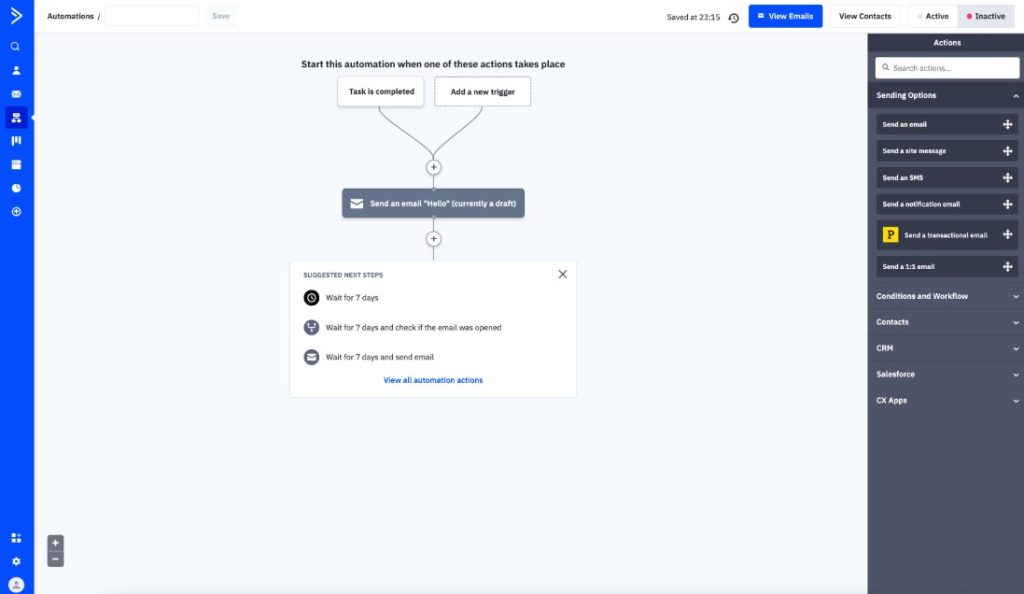
ActiveCampaign delivers powerful marketing automation with advanced workflow capabilities. It combines email marketing, CRM, sales automation, and messaging into one platform. The visual automation builder supports complex conditional logic, split testing, and goal tracking. ActiveCampaign excels at personalization with dynamic content, predictive sending, and machine-learning-powered send-time optimization. It’s particularly strong for businesses that need sophisticated customer journey mapping and detailed segmentation.
Key Features: Advanced workflows, predictive sending, CRM, email marketing, sales automation, split testing, conditional logic, lead scoring, SMS marketing, site tracking, machine learning optimization
Standout Feature: Predictive sending (AI chooses the best send time for each contact)
Pricing: Starts at $29/month
Best For: Growing businesses and agencies that need sophisticated automation.
3. Brevo (formerly Sendinblue) – Best for Beginners
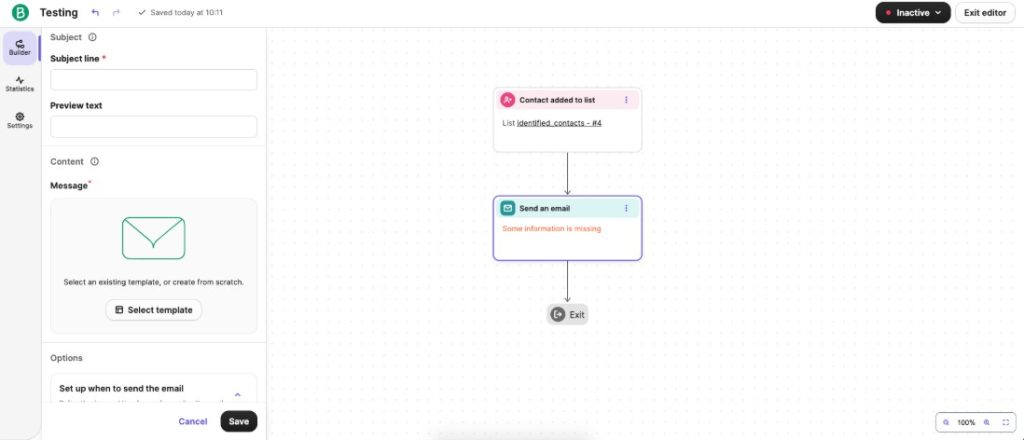
Brevo makes marketing automation accessible to everyone. The platform offers email marketing, SMS campaigns, landing pages, signup forms, and automation workflows in a beginner-friendly interface. What sets Brevo apart is its unique pricing model: unlimited contacts on the free plan, with payment based on the number of emails sent. This makes it perfect for businesses with large lists but a lower sending frequency. The platform includes transactional email, WhatsApp campaigns, and a built-in CRM.
Key Features: Email automation, SMS marketing, unlimited contacts (free plan), landing pages, signup forms, transactional emails, WhatsApp campaigns, CRM, drag and drop editor, workflow builder, A/B testing.
Standout Feature: Free plan includes unlimited contacts (pay per email sent)
Pricing: Free plan available; paid plans start at $25/month.
Best For: Small businesses and startups just getting started with automation.
4. Klaviyo – Best for eCommerce
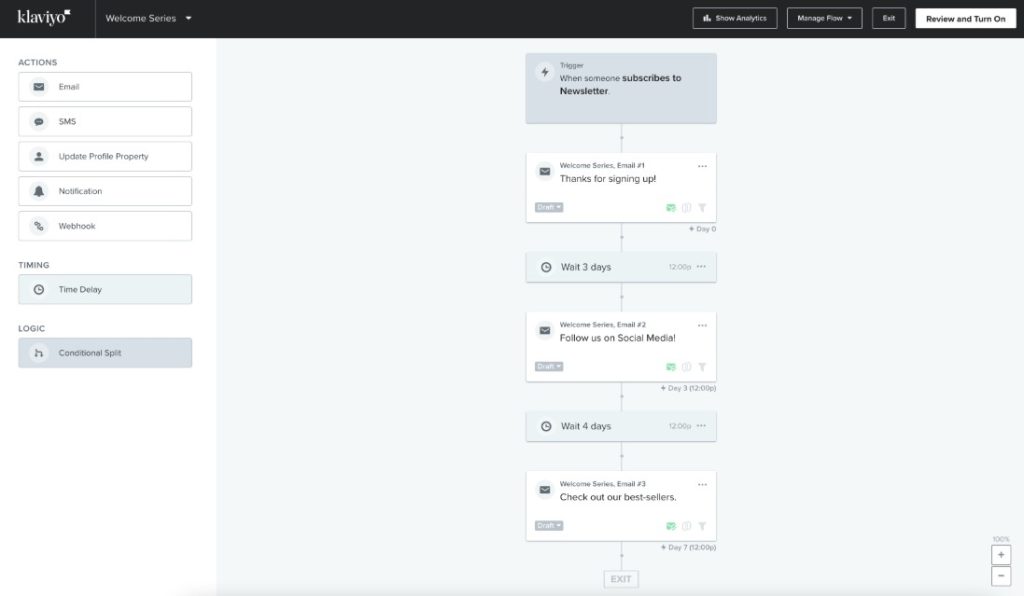
Klaviyo is purpose-built for eCommerce success. It integrates deeply with Shopify, WooCommerce, BigCommerce, and Magento to track every customer interaction. The platform automatically syncs product catalogs, purchase history, browsing behavior, and cart data. Klaviyo’s strength lies in advanced segmentation based on RFM (recency, frequency, monetary value), predictive analytics for customer lifetime value, and revenue attribution tracking. It helps online stores send highly personalized product recommendations and perfectly timed campaigns.
Key Features: eCommerce segmentation, predictive analytics, abandoned cart recovery, product recommendations, revenue tracking, RFM analysis, SMS marketing, email automation, Shopify integration, behavioral triggers, dynamic content
Pricing: Free up to 250 contacts; paid plans start at $20/month
Best For: eCommerce stores and D2C brands
5. Omnisend – Best for Multi-Channel eCommerce
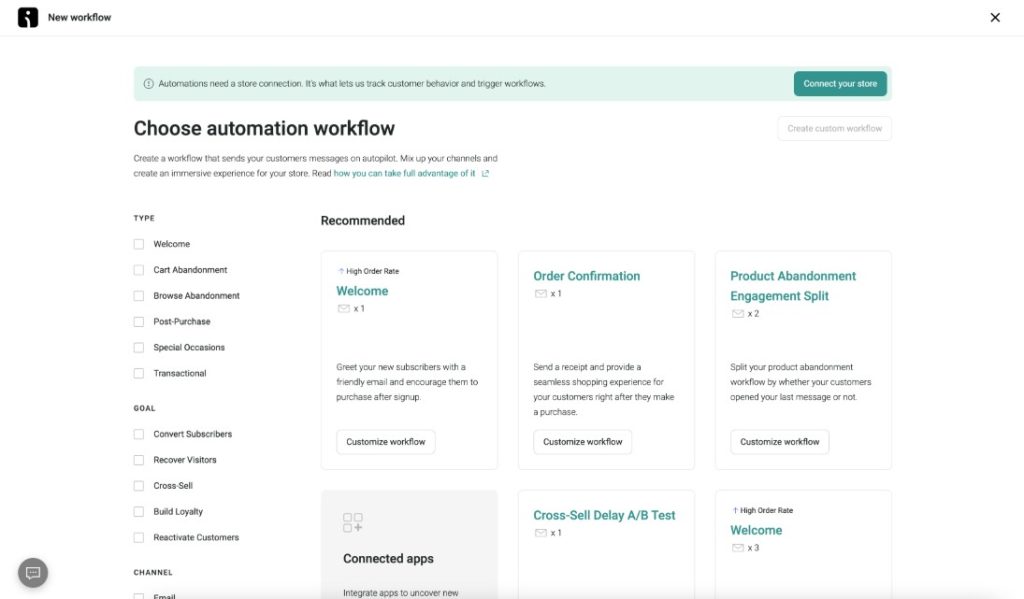
Omnisend automates customer communication across email, SMS, push notifications, and Facebook Messenger from a single platform. Built specifically for eCommerce, it includes pre-built workflows for abandoned cart recovery, welcome series, order confirmations, and post-purchase follow-ups. The platform features product recommendation blocks, dynamic discount codes, and scratch cards for interactive campaigns. Omnisend’s multi-channel approach ensures consistent messaging whether customers engage via email or mobile.
Key Features: Email automation, SMS marketing, push notifications, Facebook Messenger, pre-built workflows, product recommendations, abandoned cart recovery, dynamic content, segmentation, landing pages, signup forms
Standout Feature: Built-in SMS and web push notifications
Pricing: Free up to 250 contacts; paid plans start at $16/month
Best For: Online stores wanting to automate across multiple channels
6. Customer.io – Best for SaaS and Product Led Growth
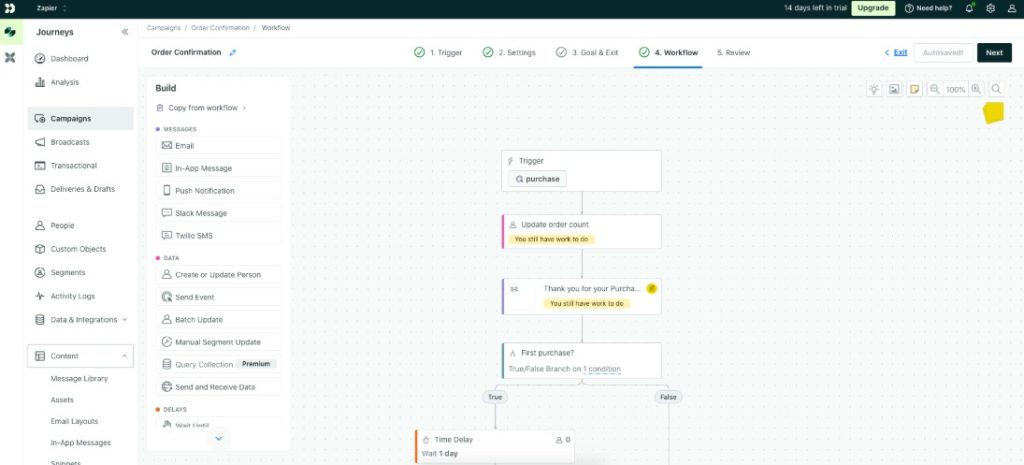
Customer.io specializes in behavior-based messaging for SaaS companies and mobile apps. The platform tracks every action users take inside your product—feature usage, button clicks, page views, and milestones. It sends targeted emails, SMS, and push notifications based on users’ behavior. Customer.io excels at onboarding sequences, trial-conversion campaigns, feature-adoption messaging, and churn prevention. The liquid templating language allows advanced personalization based on user data.
Key Features: Event-based triggers, behavioral tracking, in-app messaging, email automation, SMS marketing, push notifications, liquid templates, A/B testing, segmentation, webhooks, API access, churn prevention
Standout Feature: Event-triggered campaigns based on product usage
Pricing: Starts at $100/month
Best For: SaaS companies, mobile apps, and subscription services
7. Mailchimp – Best Free Plan
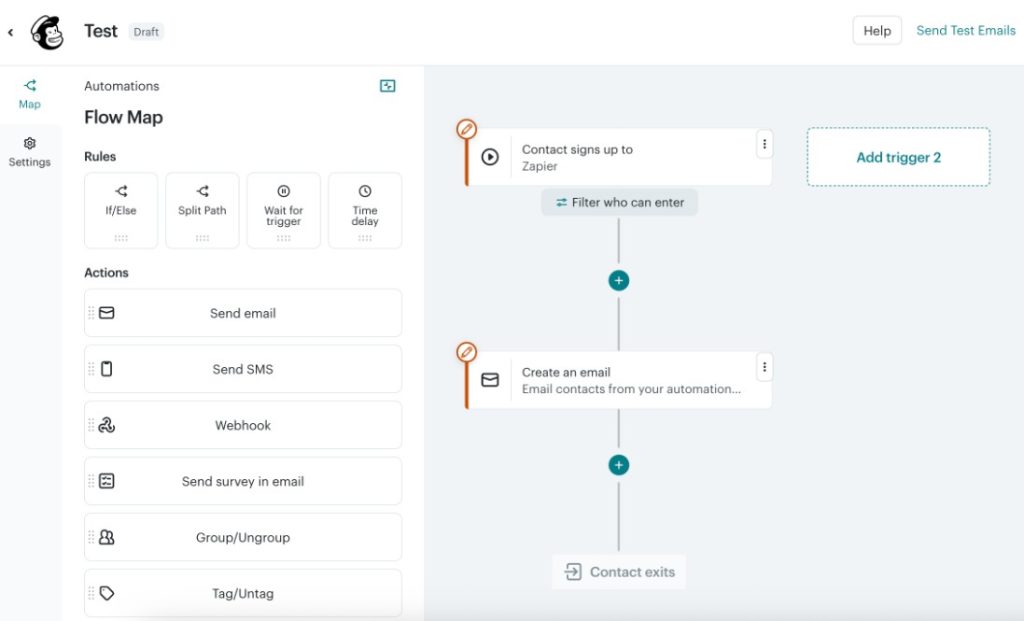
Mailchimp remains one of the most popular email marketing platforms thanks to its generous free plan and ease of use. The platform offers automation workflows, landing pages, social media ads, basic CRM features, and detailed analytics. Mailchimp’s drag-and-drop email builder makes design simple even for non-designers. Recent updates added customer journey mapping, predictive demographics, and purchase likelihood scoring. While more advanced users might outgrow it, Mailchimp is perfect for getting started.
Key Features: Email automation, drag and drop builder, landing pages, signup forms, audience segmentation, A/B testing, social media ads, basic CRM, analytics, templates, customer journey builder, predictive demographics
Standout Feature: User-friendly drag and drop email builder
Pricing: Free up to 500 contacts; paid plans start at $13/month
Best For: Solopreneurs and small businesses with basic needs
8. Sender – Best Budget-Friendly Option
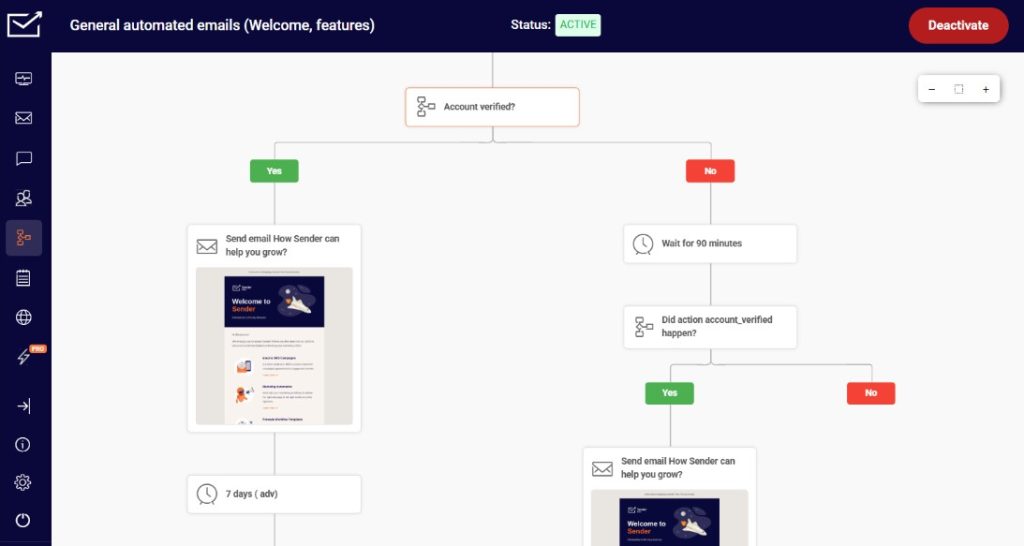
Sender delivers powerful email and SMS automation at a fraction of competitors’ prices. The platform includes automation workflows, advanced segmentation, a drag-and-drop email builder, and detailed analytics. Sender’s free plan is exceptionally generous—2,500 subscribers and 15,000 emails per month with full automation features included. The interface is clean and fast, making it easy to create professional campaigns quickly. For bootstrapped startups watching every dollar, Sender offers incredible value.
Key Features: Email automation, SMS marketing, workflow builder, segmentation, drag and drop editor, analytics, A/B testing, signup forms, 2,500 free subscribers, unlimited emails (paid plans), templates.
Standout Feature: Free plan includes 2,500 subscribers and 15,000 emails/month.
Pricing: Free plan available; paid plans start at $8/month.
Best For: Bootstrapped startups and budget-conscious businesses.
9. Zapier – Best for Cross-App Automation
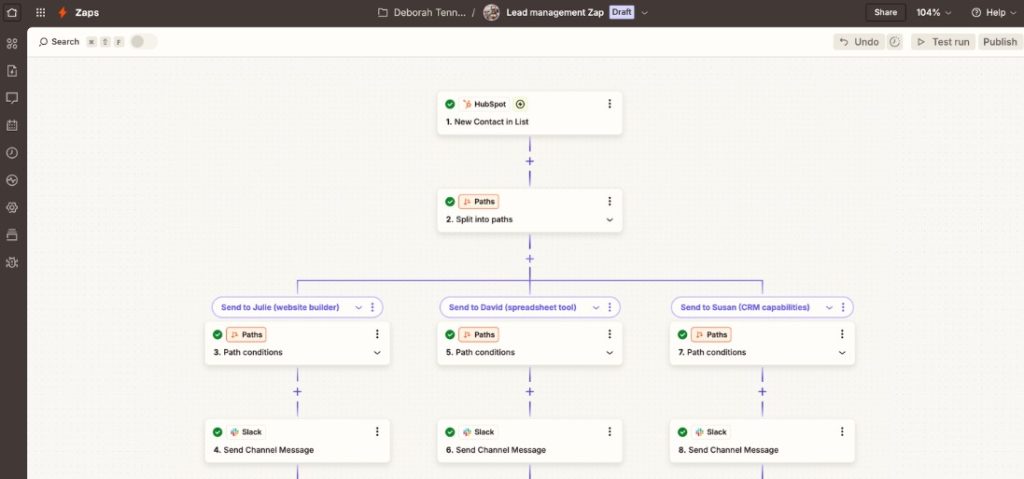
Zapier connects over 6,000 apps and automates workflows between them without coding. You can automatically move data from your CRM to your email tool, sync form submissions to spreadsheets, or trigger actions across your entire tech stack. Zapier’s “Zaps” are automated workflows that run in the background. When something happens in one app, Zapier triggers actions in other apps. It’s not traditional marketing automation, but it’s essential for making your marketing tools work together seamlessly.
Key Features: 6,000+ app integrations, multi-step workflows, conditional logic, filters, delays, webhooks, JavaScript code steps, team collaboration, paths (if/then branching), Formatter tools, custom integrations, scheduling.
Standout Feature: Largest app ecosystem (6,000+ integrations).
Pricing: Free plan available; paid plans start at $19.99/month.
Best For: Teams using multiple tools that need them to work together.
10. Ortto – Best for Marketing and Sales Alignment
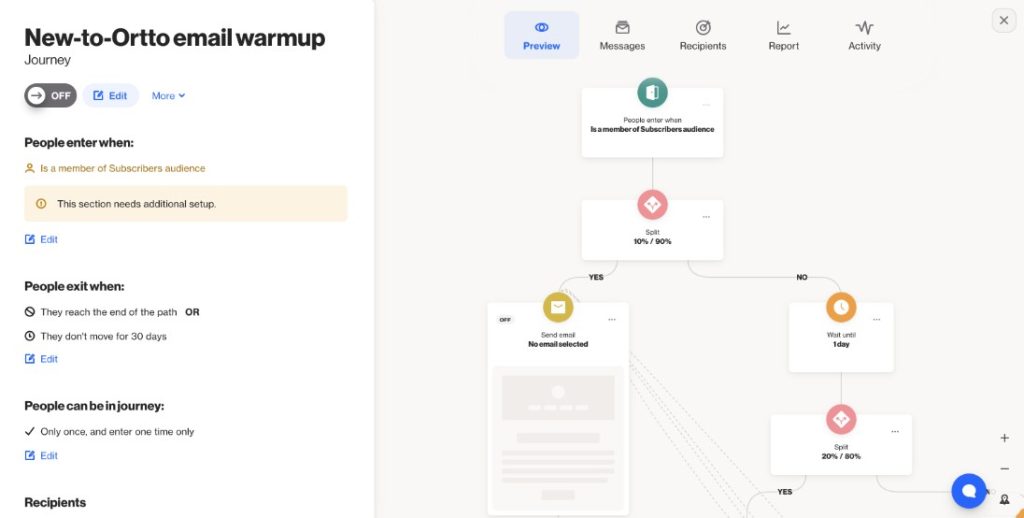
Ortto combines marketing automation with sales engagement and customer data platform (CDP) capabilities. The platform unifies customer data from every touchpoint, allowing you to build sophisticated segments and personalized campaigns. Ortto includes email, SMS, live chat, pop-ups, and in-app messaging. The visual journey builder makes complex automation accessible. Built-in analytics track customer lifecycle, revenue attribution, and campaign ROI. Ortto is particularly well-suited for B2B companies that need tight coordination between marketing and sales.
Key Features: Built-in CDP, email automation, SMS marketing, live chat, visual journey builder, lead scoring, audience segmentation, analytics, revenue tracking, integrations, pop-ups, and in-app messaging.
Standout Feature: Built-in CDP unifies customer data across all touchpoints.
Pricing: Starts at $509/month.
Best For: B2B companies and sales-driven organizations.
11. ManyChat – Best for Chatbot Automation
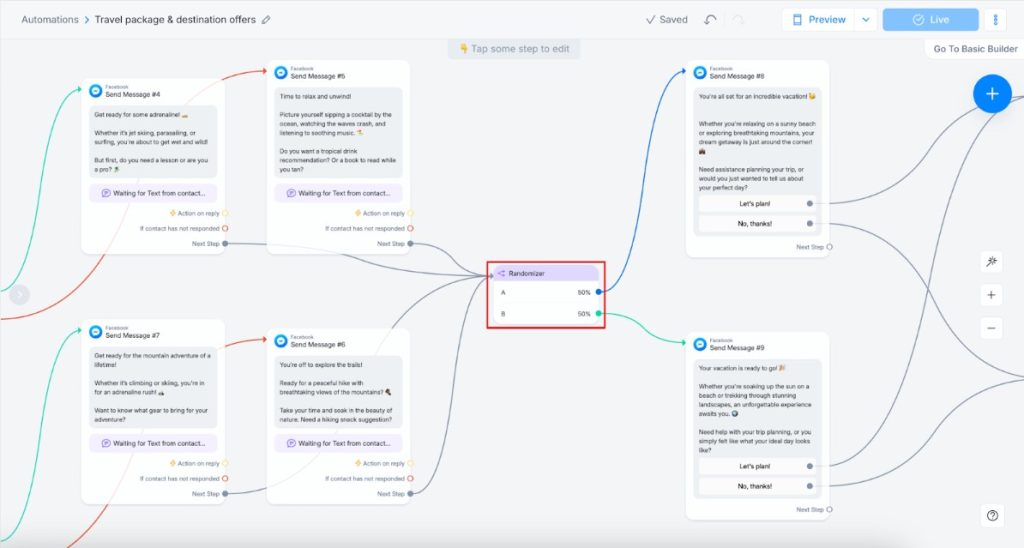
ManyChat specializes in conversational marketing through automated chatbots on Facebook Messenger, Instagram, WhatsApp, and SMS. The visual chatbot builder lets you create interactive conversations with buttons, quick replies, images, and videos. ManyChat excels at lead generation through social media, automated customer support, abandoned cart recovery, and appointment booking. It’s perfect for businesses that engage customers primarily through social channels rather than email. Integration with eCommerce platforms makes product sales possible directly in chat.
Key Features: Facebook Messenger automation, Instagram chatbots, WhatsApp business, SMS marketing, visual chatbot builder, templates, lead generation, eCommerce integration, audience segmentation, growth tools, analytics.
Standout Feature: Visual chatbot builder with templates.
Pricing: Free plan available; paid plans start at $15/month.
Best For: Social media-focused businesses and conversational marketing.
12. LeadSquared – Best for High Volume Lead Management
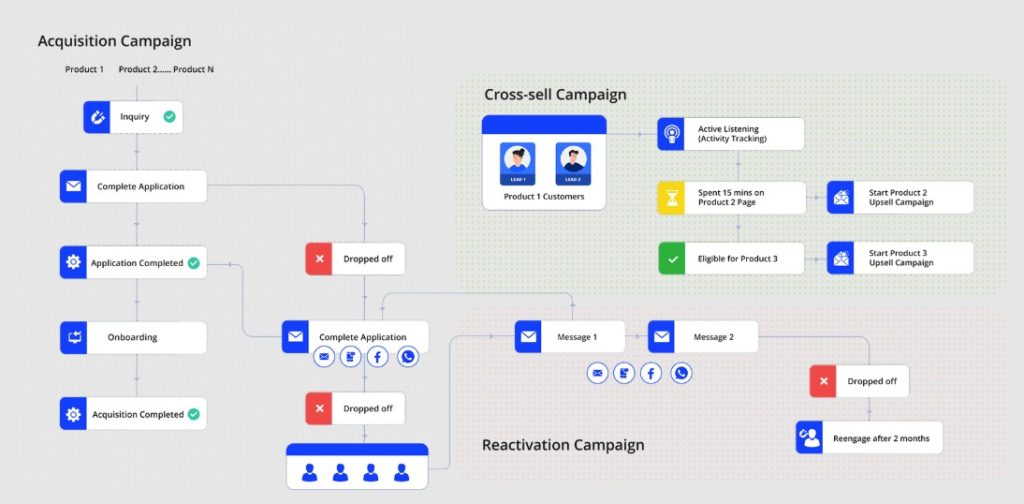
LeadSquared handles thousands of leads per month with built-in capture, scoring, distribution, and nurturing. The platform includes a built-in dialer for outbound calling, call recording, and automatic call logging. LeadSquared excels in industries such as education, real estate, insurance, and healthcare, where high-touch sales processes are common. The platform tracks every interaction, assigns leads intelligently according to rules, and automates follow-up via email, SMS, and phone. It’s particularly strong for teams managing complex, multi-touch sales cycles.
Key Features: Lead capture and scoring, built-in dialer, call tracking, SMS automation, email marketing, workflow automation, lead distribution rules, landing pages, CRM, analytics, and mobile app.
Standout Feature: Built-in dialer and call tracking.
Pricing: Custom pricing (starts around $400/month).
Best For: Education, real estate, insurance, and healthcare industries.
13. SendPulse – Best Multi-Channel Budget Option
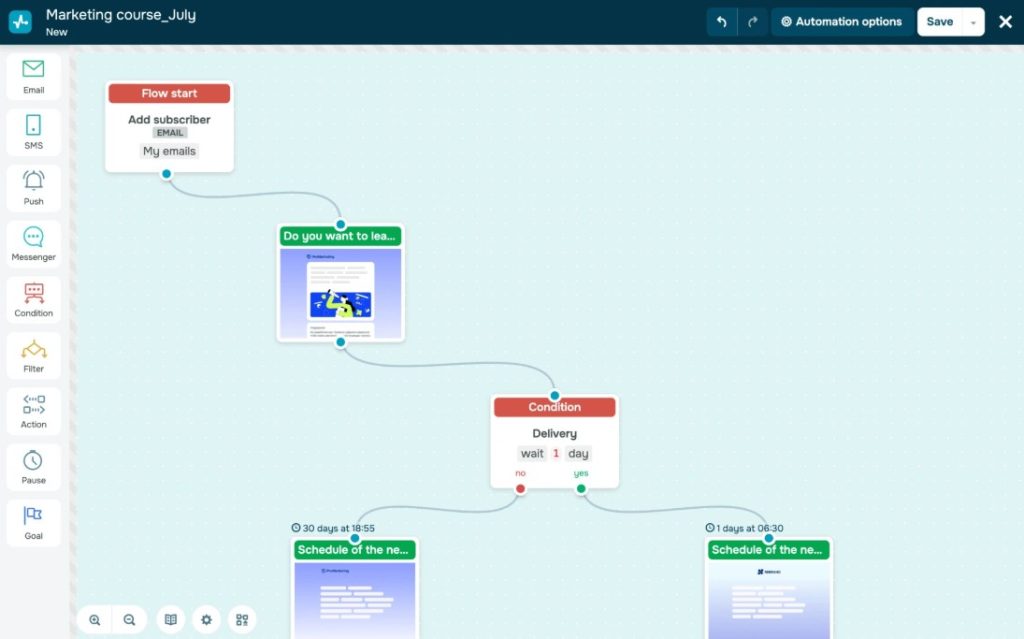
SendPulse delivers email, SMS, web push notifications, chatbots, and landing pages at remarkably affordable prices. The free plan includes 500 subscribers across email, unlimited web push notifications, and chatbot functionality for Telegram, WhatsApp, and Facebook Messenger. SendPulse’s automation 360 feature creates multi-channel workflows that combine email, SMS, and web push in a single journey. For small businesses wanting comprehensive automation without breaking the bank, SendPulse offers exceptional value across channels.
Key Features: Email automation, SMS marketing, web push notifications, chatbots (Telegram, WhatsApp, Facebook), landing pages, Automation 360, drag and drop builder, segmentation, A/B testing, transactional emails, analytics.
Standout Feature: Free plan includes email, web push, and chatbots.
Pricing: Free plan available; paid plans start at $8/month.
Best For: Small businesses wanting multi-channel automation on a budget.
14. Moosend – Best for Simplicity and Speed
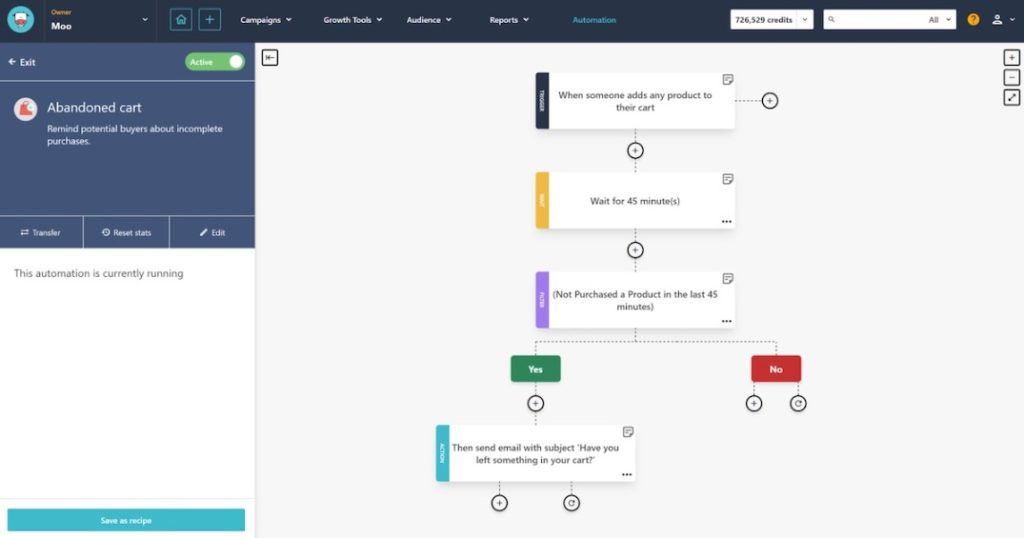
Moosend focuses on making email marketing and automation fast and simple. The clean interface loads quickly and keeps complexity to a minimum without sacrificing power. Moosend includes automation workflows, landing pages, signup forms, and detailed reporting. AI-powered product recommendations automatically personalise emails for e-commerce stores. The platform is particularly popular with agencies managing multiple client accounts, thanks to unlimited team members and white-label options. Despite its simplicity, Moosend offers advanced features, including SMTP relay.
Key Features: Email automation, AI product recommendations, landing pages, signup forms, drag and drop builder, workflow automation, segmentation, A/B testing, analytics, SMTP relay, unlimited team members, white label.
Standout Feature: AI-powered product recommendations for e-commerce.
Pricing: Free up to 1,000 subscribers; paid plans start at $9/month.
Best For: Small businesses and agencies managing multiple client accounts.
15. Drip – Best for Advanced eCommerce Segmentation
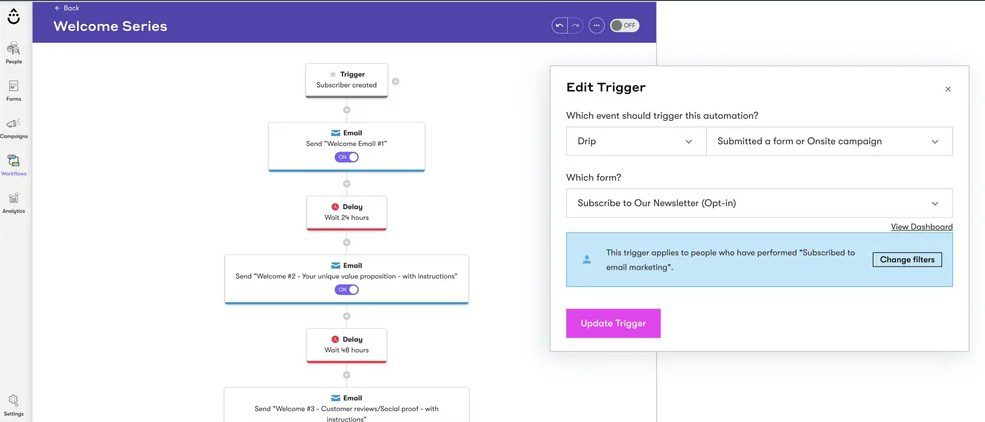
Drip positions itself as an eCommerce CRM that tracks every customer interaction across email, website visits, and purchase history. The platform excels at behavioral segmentation—you can create audiences based on products viewed, categories browsed, purchase frequency, average order value, and predicted lifetime value. Drip’s visual workflow builder supports complex automation with branching logic. Revenue attribution tracking shows exactly how much money each campaign generates. For eCommerce brands focused on maximizing customer lifetime value, Drip delivers sophisticated tools.
Key Features: eCommerce CRM, behavioral segmentation, revenue tracking, visual workflow builder, email automation, SMS marketing, personalization, product recommendations, abandoned cart recovery, lifecycle automation, multi-channel attribution.
Standout Feature: Revenue tracking by campaign.
Pricing: Starts at $39/month.
Best For: Growing eCommerce brands focused on customer lifetime value.
16. GetResponse – Best for Webinar Automation
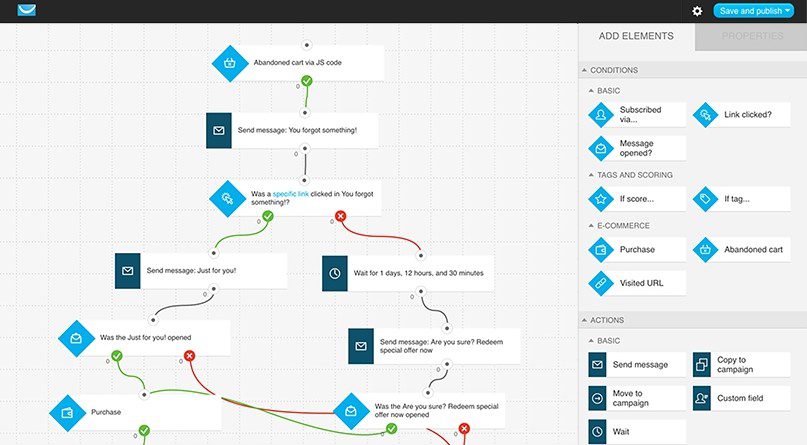
GetResponse uniquely combines email marketing, automation, and webinar hosting in one platform. You can create automated webinar funnels that promote events via email, send reminders, deliver webinar recordings, and follow up with attendees. The platform includes landing pages, conversion funnels, and eCommerce features like abandoned cart recovery. GetResponse’s automation builder supports complex workflows with conditions and actions. For coaches, consultants, and B2B companies using webinars for lead generation, GetResponse eliminates the need for separate tools.
Key Features: Email automation, webinar hosting, automated webinar funnels, landing pages, conversion funnels, eCommerce features, abandoned cart recovery, workflow automation, segmentation, A/B testing, analytics, forms.
Standout Feature: Automated webinar funnels.
Pricing: Starts at $19/month.
Best For: Coaches, consultants, and B2B companies using webinars for lead generation.
17. Pardot (Salesforce Marketing Cloud Account Engagement) – Best for Enterprise B2B
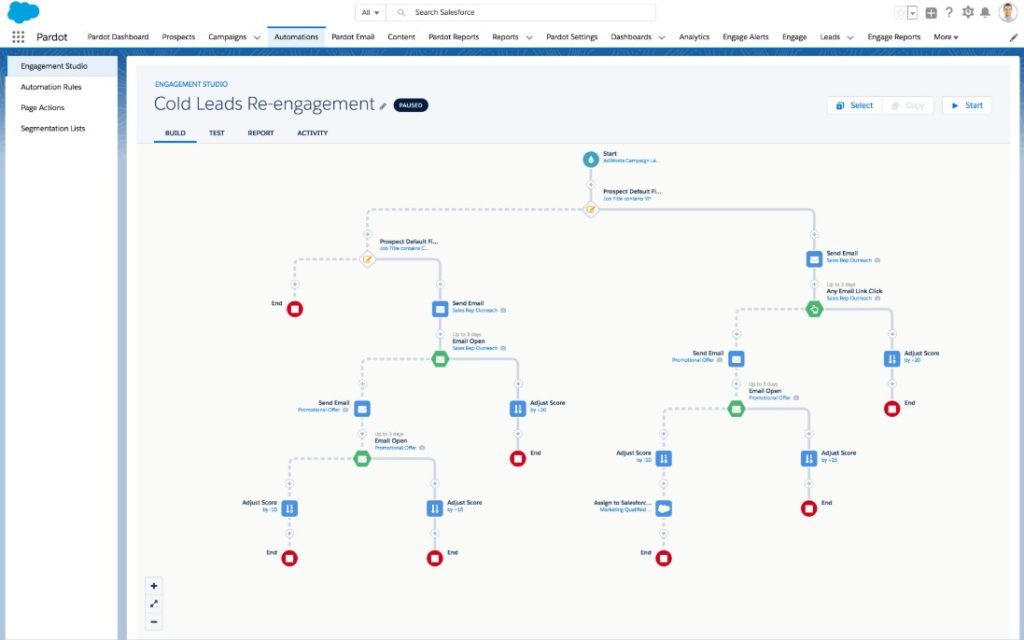
Pardot is Salesforce’s B2B marketing automation platform, offering native integration with Salesforce CRM. The platform excels at lead nurturing, scoring, and grading with sophisticated rules based on demographics and engagement. Pardot tracks website visitor behavior, automatically assigns scores, and notifies sales when leads are ready. Features include landing pages, forms, email marketing, dynamic content, and detailed ROI reporting. For enterprises already invested in Salesforce, Pardot provides seamless alignment between marketing and sales through powerful automation.
Key Features: Salesforce native integration, lead scoring and grading, visitor tracking, email automation, landing pages, dynamic content, ROI reporting, drip campaigns, A/B testing, social media integration, and analytics.
Standout Feature: Native Salesforce integration.
Pricing: Starts at $1,250/month.
Best For: Large B2B enterprises already using Salesforce.
18. Marketo Engage (Adobe) – Best for Enterprise Marketing
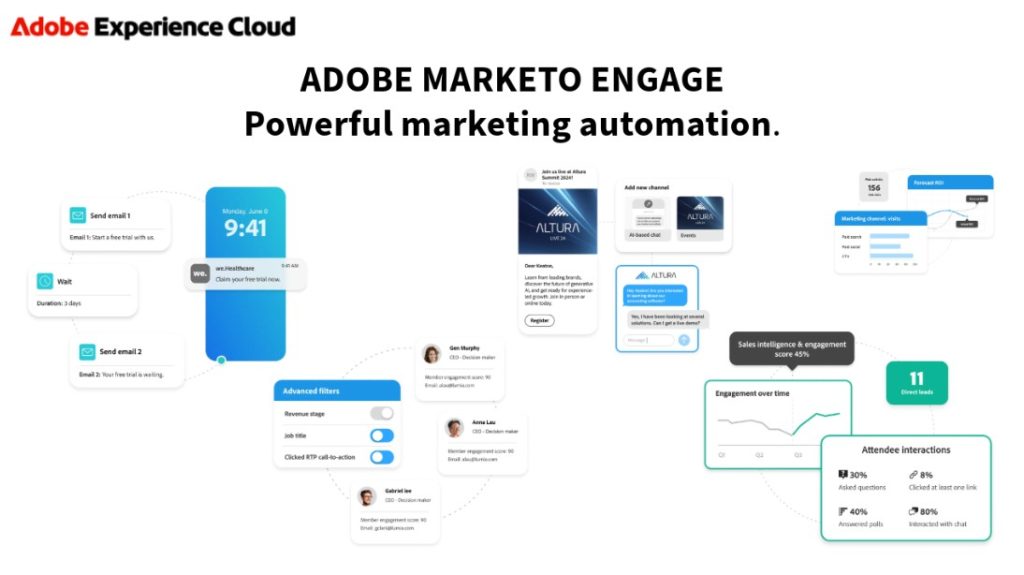
Marketo Engage is Adobe’s enterprise marketing automation platform, designed for complex, multi-touch B2B marketing. The platform handles sophisticated customer journeys, account-based marketing (ABM), and multi-touch attribution modelling. Marketo excels at personalization at scale, supporting dynamic content across email, web, and ads. The revenue cycle analytics show exactly how marketing contributes to the pipeline and revenue. Marketo requires dedicated marketing operations expertise but delivers unmatched power for enterprises running sophisticated demand generation programs.
Key Features: Account-based marketing, multi-touch attribution, revenue cycle analytics, advanced segmentation, email automation, landing pages, dynamic content, predictive content, web personalization, social marketing, event management.
Standout Feature: Advanced attribution modeling.
Pricing: Custom pricing (typically $5,000+/month).
Best For: Enterprise B2B companies with dedicated marketing ops teams.
19. Autopilot – Best for Visual Customer Journeys
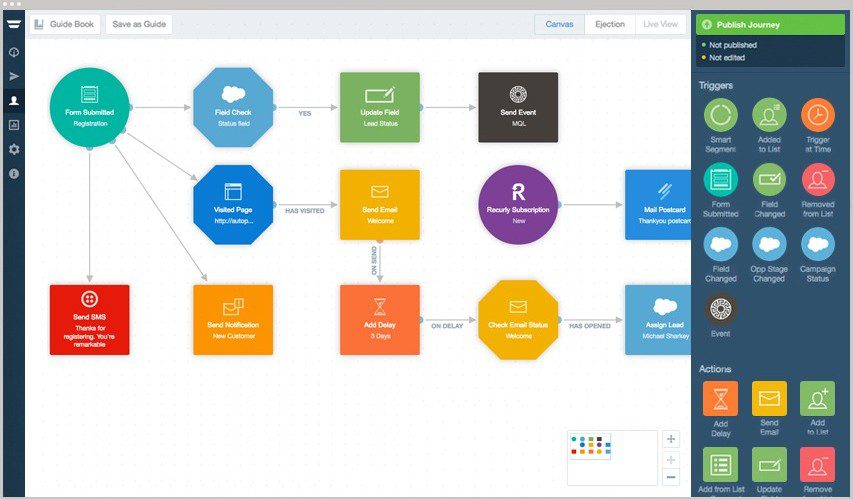
Autopilot offers the most visually beautiful customer journey builder I’ve seen in the market. The canvas-based interface lets you design complex automation workflows that are easy to understand and modify. Autopilot includes email, SMS, in-app messaging, and physical postcards (direct mail). The platform excels at creating cohesive multi-channel customer journeys. Pre-built templates help you launch quickly. For marketing teams that appreciate design and want powerful automation without technical complexity, Autopilot strikes the perfect balance.
Key Features: Visual journey canvas, email automation, SMS marketing, in-app messaging, direct mail (postcards), templates, multi-channel workflows, personalization, segmentation, A/B testing, integrations, analytics
Standout Feature: Gorgeous visual journey builder.
Pricing: Starts at $49/month.
Best For: Marketing teams that want powerful automation without technical complexity.
20. Iterable – Best for Cross-Channel Campaigns at Scale
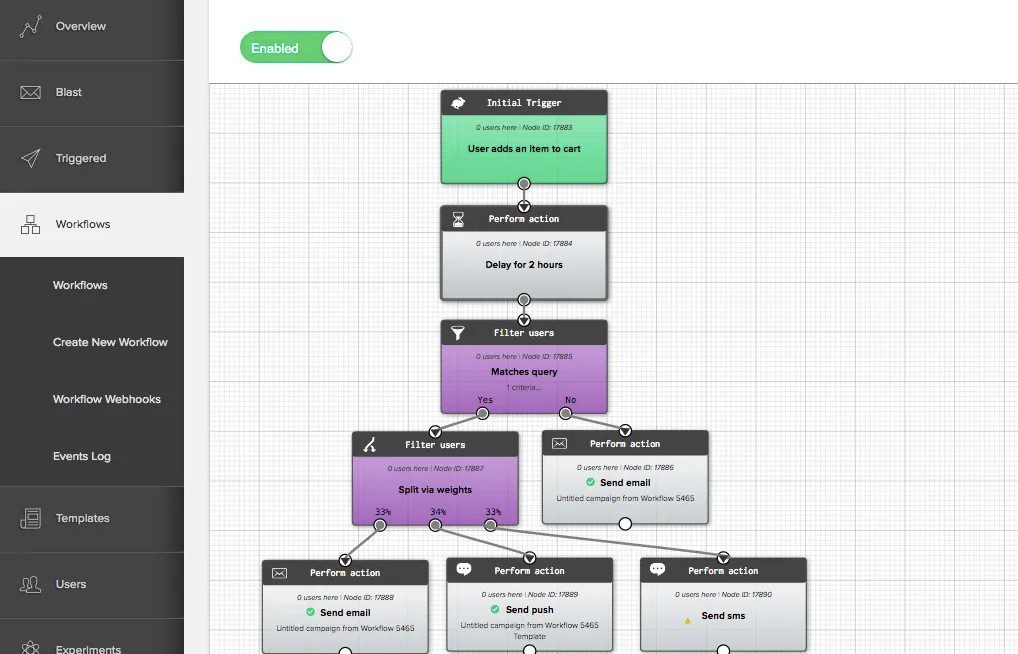
Iterable powers personalised marketing campaigns across email, SMS, push notifications, in-app messages, and direct mail for high-volume consumer brands. The Workflow Studio supports complex, multi-step campaigns with branching logic, wait periods, and A/B testing. Iterable’s AI-powered send time optimization, channel optimization, and brand affinity scoring ensure messages reach customers through their preferred channels at optimal times. Built for scale, Iterable handles millions of messages daily for marketplaces, media companies, and consumer apps.
Key Features: Multi-channel orchestration, Workflow Studio, AI send time optimization, channel optimization, brand affinity, email automation, SMS marketing, push notifications, in-app messaging, direct mail, and personalization.
Standout Feature: Workflow Studio for complex, multi-step campaigns.
Pricing: Custom pricing (enterprise level).
Best For: Consumer brands, media companies, and marketplaces with millions of users.
How Do These Tools Compare? (Quick Overview)
| Tool | Best For | Standout Feature | Price Range |
|---|---|---|---|
| HubSpot | All-in-one solution | Free CRM | Free – $800+/month |
| ActiveCampaign | Advanced automation | Predictive sending | $29 – $149/month |
| Brevo | Beginners | Unlimited contacts on free plan | Free – $65/month |
| Klaviyo | eCommerce | Predictive analytics | Free – $700+/month |
| Omnisend | Multi-channel eCommerce | SMS + Email + Push | Free – $59/month |
| Customer.io | SaaS / Product-led growth | Event-based triggers | $100+/month |
| Mailchimp | Free plan users | Ease of use | Free – $350/month |
| Sender | Budget option | Generous free tier | Free – $29/month |
| Zapier | App integration | 6,000+ app connections | Free – $69/month |
| Ortto | Marketing + Sales alignment | Built-in CDP | $509+/month |
| ManyChat | Chatbots | Instagram + Messenger automation | Free – $145/month |
| LeadSquared | High-volume leads | Built-in dialer | $400+/month |
| SendPulse | Multi-channel (budget) | Web push + chatbots | Free – $69/month |
| Moosend | Simplicity | Clean interface | Free – $80/month |
| Drip | eCommerce segmentation | Revenue attribution | $39 – $1,999/month |
| GetResponse | Webinars | Automated webinar funnels | $19 – $119/month |
| Pardot | Enterprise B2B | Salesforce native | $1,250+/month |
| Marketo | Enterprise marketing | Advanced attribution | $5,000+/month |
| Autopilot | Visual journeys | Beautiful UI | $49+/month |
| Iterable | Cross-channel at scale | Workflow Studio | Custom enterprise pricing |
How Much Does Marketing Automation Software Cost in 2026?
Pricing varies wildly based on features, contact limits, and business size.
Free vs. Paid Plans
Several tools offer free plans, including:
- Mailchimp: Free up to 500 contacts.
- Brevo: Free with unlimited contacts (pay per email sent).
- Sender: Free up to 2,500 subscribers.
- HubSpot: Free CRM and basic marketing tools.
- SendPulse: Free email and chatbot features.
Free plans are great for testing and getting started. Still, they usually limit automation features, remove branding, or cap the number of emails you can send.
Entry Level Pricing (Small Businesses)
Most small business plans range from $10 to $50 per month and include:
- Email automation.
- Basic workflows.
- Contact segmentation.
- Email templates.
- Reports and analytics.
Examples:
- Sender: $8/month.
- Moosend: $9/month.
- Brevo: $25/month.
- ActiveCampaign: $29/month.
Mid Tier Pricing (Growing Businesses)
As your contact list grows, expect to pay $50 to $500 per month. Mid-tier plans add:
- Advanced automation.
- A/B testing.
- CRM integration.
- SMS marketing.
- Multiple users.
Examples:
- Klaviyo: $100 to $300/month (based on contacts)
- Drip: $154/month (for 5,000 contacts)
- HubSpot: $800/month
Enterprise Pricing
Enterprise plans start at $1,000 to $10,000+ per month and include:
- Dedicated account management.
- Advanced reporting and attribution.
- Custom integrations.
- White glove onboarding.
- API access.
- Multiple workspaces.
Examples:
- Pardot: $1,250/month.
- Marketo: $5,000+/month (custom pricing).
- Iterable: Custom enterprise pricing.
Pro tip: Most platforms charge based on the number of contacts in your database. I always recommend cleaning your lists regularly to avoid paying for inactive subscribers.
Which Marketing Automation Tool Is Right for Your Business?
Picking the wrong tool wastes time and money. The right choice depends on your budget, team size, and the channels you need to automate.
Before you decide, ask yourself: How many contacts do I have? Do I need email only, or multi-channel automation? Does my team need a built-in CRM, or can we use third-party integrations like Shopify, Salesforce, or Google Analytics?
Here’s how I match different stages to the right tools:
Just starting? Choose Brevo or Sender — both offer generous free plans and grow with you.
Small business ready to invest? Go with ActiveCampaign for powerful automation or Mailchimp for simplicity.
Running an eCommerce store? Pick Klaviyo for analytics or Omnisend for multi-channel campaigns.
SaaS or app company? Choose Customer.io for behavior-based messaging.
Need all in one? HubSpot covers CRM, marketing, and sales in one platform.
Enterprise? Look at Pardot, Marketo, or Iterable.
My advice: Start small, test your workflows, and optimize over time. The more you use it, the smarter it gets.
For more insights, check out our complete guide to the best SaaS tools.
Ready to Automate Your Marketing? The Tool Marketer Has You Covered
Choosing the right marketing automation tool can transform your business. But with hundreds of options, it’s easy to feel overwhelmed.
That’s where I come in at The Tool Marketer.
I review, compare, and rank the best SaaS tools so you don’t have to waste time testing every platform. Whether you’re looking for marketing automation, CRM, project management, or analytics tools, I break down the pros, cons, and real-world use cases in simple, honest language.
Stop guessing. Start growing.
Visit The Tool Marketer today and discover the perfect tools for your business.
Frequently Asked Questions (FAQ)
What’s the best marketing automation tool for a small business?
For small businesses, I recommend Brevo and Sender as great starting points. They offer easy-to-use dashboards, generous free plans, and affordable pricing. If you need advanced automation and lead scoring, ActiveCampaign is worth the investment.
Is there free marketing automation software?
Yes. Several platforms provide free plans:
- Mailchimp – Free up to 500 contacts.
- Brevo – Free with unlimited contacts (pay per send).
- Sender – Free up to 2,500 subscribers.
- HubSpot – Free CRM with basic automation.
Free plans are ideal for testing before upgrading.
What’s the difference between CRM and marketing automation?
A CRM helps you store contacts, track interactions, and manage sales pipelines.
Marketing automation uses that data to automatically send targeted campaigns, nurture leads, and track engagement. Many tools I’ve reviewed combine both features into a single platform.
What is the easiest marketing automation tool to learn?
Brevo and Mailchimp are beginner-friendly with drag-and-drop editors and simple workflows. Sender is also easy to use and works well for small teams.
Do I need a marketing automation tool if I’m using an email service provider?
If you only send newsletters, an email service provider may be enough. But for advanced workflows such as lead nurturing, behavior-based emails, and customer journeys, I always recommend a marketing automation tool.
Share