
n the ever-accelerating world of digital business, a well-defined marketing strategy is your compass, but what is marketing tactics? Simply put, marketing tactics serve as your engine and steering wheel. Without understanding and effectively deploying these actionable steps, even the most brilliant strategy remains just an idea.
In today’s dynamic landscape, where AI and Generative Engine Optimization (GEO) are reshaping how information is discovered and consumed, understanding marketing tactics has never been more critical. They are the specific actions that translate your high-level plans into measurable results, allowing you to reach your target audience, drive engagement, and ultimately, achieve your business objectives.
This comprehensive guide will demystify marketing tactics, differentiate them from strategies and goals, explore various types, and show you how AI is revolutionizing their implementation. By the end, you’ll have a clear roadmap to selecting, executing, and optimizing the right tactics for your modern marketing success.
Why Understanding What Is Marketing Tactics Is Critical in 2026
The digital marketing landscape has transformed dramatically, and understanding what is marketing tactics has become more important than ever before. With the rise of AI-powered search engines, generative AI tools, and Generative Engine Optimization (GEO), the tactics that worked just two years ago may no longer deliver the same results.
Modern consumers interact with brands across multiple channels, often simultaneously. They might discover your brand through a TikTok video, research you on Google’s AI Overview, read reviews on Reddit, and finally convert through a retargeted Instagram ad. Each of these touchpoints requires specific tactics tailored to the platform and user intent.
Moreover, knowing what is marketing tactics allows you to allocate your budget more effectively. Instead of spreading resources thin across every possible channel, you can identify which tactics deliver the highest ROI for your specific business goals. This becomes especially crucial for small businesses and startups working with limited budgets, where every marketing dollar must count. When you understand the tactical options available—from SEO and content marketing to paid advertising and influencer partnerships—you can make informed decisions that drive real business growth.
1. Defining Marketing Tactics: The Actionable Steps
What Exactly Are Marketing Tactics?
At its core, a marketing tactic is a specific, actionable task or method employed to execute a broader marketing strategy and achieve a defined marketing goal. Think of tactics as the “how-to” components of your marketing plan – the tools, techniques, and activities you use to engage your target audience.
Think of strategy as your destination and the reason for the trip; tactics are the specific steps you take to get there.
Marketing Tactics vs. Marketing Strategy vs. Marketing Goals: Understanding the Hierarchy
To truly grasp marketing tactics, it’s essential to understand their relationship within the broader marketing ecosystem. They exist within a clear hierarchy:
- Marketing Goal: This is the ultimate, specific outcome you aim to achieve. Goals are aspirational and singular, often quantifiable.
- Example Goal: “Increase website organic traffic by 20% within 12 months.”
- Example Goal: “Boost product sales by 15% in Q4.”
- Marketing Strategy: This is your overarching plan or approach for achieving your marketing goals. It clarifies your strategic objectives, details your competitive approach, and often pinpoints your target audience. It’s the “master plan” that dictates what you will undertake.
- Example Strategy (for “Increase organic traffic”): “Implement a robust inbound marketing program focused on thought leadership.”
- Example Strategy (for “Boost product sales”): “Launch a comprehensive digital rebrand focusing on our unique value proposition.”
- Marketing Tactic: These are the specific, actionable steps you take to execute your strategy and ultimately reach your goals. They are the tools and activities you deploy.
- Example Tactics (for “Implement inbound marketing strategy”): “Publish daily blog posts optimized for relevant long-tail keywords,” “Develop a series of evergreen video tutorials,” “Launch a lead magnet to capture email subscribers.”
- Example Tactics (for “Launch digital rebrand strategy”): “Redesign key brand elements (logo, color scheme),” “Overhaul website UX and launch a refreshed site.”
Analogy: Imagine building a house.
- Goal: Have a beautiful, functional home.
- Strategy: Design a modern, energy-efficient blueprint.
- Tactics: Pour the foundation, frame the walls, install plumbing, paint the rooms, choose specific fixtures.
Lorem Ipsum has been the industry’s standard dummy text ever since the 1500s.
Source: This distinction is a fundamental concept in marketing, elaborated upon by resources like Camphouse’s “Marketing Strategy vs Tactics: the Difference Explained” and Semrush’s “12 Marketing Tactics.”
2. The Landscape of Marketing Tactics: Types and Examples
Marketing tactics are incredibly diverse, spanning numerous channels and objectives. To better understand them, we can categorize them in several ways:
Categorization of Tactics:
- By Channel:
- Digital Marketing Tactics: These leverage online channels and technologies.
- Traditional Marketing Tactics: These use offline media.
- By Objective: Tactics can also be grouped by the specific marketing funnel stage they target (e.g., Awareness, Lead Generation, Conversion, Retention).
- By Inbound vs. Outbound: Tactics can be proactive (outbound) or designed to attract customers (inbound).
Detailed Examples of Key Marketing Tactics:
Let’s dive into some of the most prominent marketing tactics used by businesses today, with a focus on digital approaches that are most relevant to modern marketers:
Search Engine Optimization (SEO) Tactics
These tactics aim to improve your website’s visibility in search engine results, driving organic (unpaid) traffic.
- On-Page SEO: Optimizing individual web pages to rank higher and earn more relevant traffic in search engines.
- Examples: Keyword research and integration, high-quality content creation, optimizing meta titles and descriptions, improving user experience (UX) and site readability, enhancing E-E-A-T (Experience, Expertise, Authoritativeness, Trustworthiness).
- Technical SEO: Technical SEO involves optimizing your website to meet the technical standards of modern search engines, facilitating efficient crawling and indexing.
- Examples: Improving site speed, mobile-friendliness, implementing structured data (schema markup) for rich snippets, creating XML sitemaps, optimizing robots.txt.
- Off-Page SEO: Activities done outside your website to improve its search engine ranking.
- Examples: Building high-quality backlinks from reputable sites, brand mentions, digital public relations (PR).
- Statistic: 53% of all website traffic comes from organic searches. (Source: Camphouse.io, “Marketing Strategy vs Tactics: the Difference Explained”)
Content Marketing Tactics
Content marketing involves crafting and sharing valuable, relevant, and consistent content to draw in and keep a specific audience.
- Examples: Blogging (e.g., daily blog posts on industry topics), creating evergreen video tutorials, infographics, whitepapers, case studies, e-books, webinars, podcasts.
- Statistic: Short-form video is the top leveraged media format in marketers’ content strategies, with 91% of businesses using video as a marketing tool in 2025. (Source: Camphouse.io, “Marketing Strategy vs Tactics: the Difference Explained”)
Lorem Ipsum has been the industry’s standard dummy text ever since the 1500s.
Paid Advertising Tactics
Using paid channels to display promotional messages to target audiences.
- Examples: Pay-Per-Click (PPC) campaigns on Google Ads and Bing Ads, Social Media Advertising (e.g., Facebook Ads, Instagram Ads, LinkedIn Ads, TikTok Ads), Display Advertising, Retargeting campaigns.
- Statistic: The average conversion rate for Facebook ads is 8.25%. (Source: Camphouse.io, “Marketing Strategy vs Tactics: the Difference Explained”)
Social Media Marketing Tactics
Leveraging social media platforms to connect with your audience, build brand awareness, drive traffic, and generate leads.
- Examples: Running contests and giveaways, engaging with user-generated content (UGC), participating in trending challenges, consistent posting of engaging content, utilizing social media stories and reels.
Influencer Marketing Tactics
Partnering with individuals who have a dedicated following and credibility in your niche to promote your products or services.
- Examples: Sponsored posts, product reviews, brand ambassadorships, affiliate programs with influencers.
- Statistic: In 2023, 1 in 4 marketers leveraged influencer marketing. (Source: Camphouse.io, “Marketing Strategy vs Tactics: the Difference Explained”)
Email Marketing Tactics
Directly communicating with prospects and customers via email to nurture leads, drive sales, and build customer loyalty.
- Examples: Automated welcome sequences, segmented email campaigns, personalized product recommendations, abandoned cart reminders, newsletter distribution.
Referral & Loyalty Programs
It’s about encouraging current customers to refer new ones, and rewarding loyal patrons for their continued business.
- Examples: Offering discounts for referrals, points-based loyalty systems, exclusive access for repeat purchasers.
3. AI-Powered Marketing Tactics & Generative Engine Optimization (GEO): The Future is Now
The advent of Artificial Intelligence (AI) is not just changing marketing; it’s revolutionizing the very tactics we employ. For modern marketers, especially those concerned with ranking in next-generation search environments, understanding AI’s influence is paramount.
How AI is Reshaping Marketing Tactics:
- AI for Content Creation and Optimization: AI tools can assist in generating blog post outlines, drafting initial content, suggesting keyword variations, optimizing headlines for click-through rates, and even translating content. This significantly boosts efficiency and content quality.
- AI for Personalized Marketing: AI algorithms analyze vast amounts of user data to create highly personalized experiences. This leads to more effective tactics like dynamic content on websites, tailored product recommendations, and hyper-segmented email campaigns.
- AI for Ad Targeting and Optimization: AI powers sophisticated ad platforms, enabling predictive bidding, identifying optimal audience segments, and automating campaign adjustments in real-time to maximize ROI.
- AI for Predictive Analytics: AI can forecast future trends, anticipate customer behavior, and identify emerging opportunities or potential risks, allowing marketers to choose and adjust tactics proactively rather than reactively.
Integrating Generative Engine Optimization (GEO) into Your Tactical Approach:
As search engines evolve into “generative engines” (like Google’s AI Overviews, ChatGPT, Gemini, Grok, and Perplexity), marketing tactics must adapt. Generative Engine Optimization (GEO) focuses on optimizing your content to be easily understood, summarized, and cited by these AI systems.
Lorem Ipsum has been the industry’s standard dummy text ever since the 1500s.
- Optimizing for Conversational AI: Tactics should include optimizing content for natural language queries, anticipating how users might ask questions to voice assistants or chatbots. This means clear, direct answers to common questions within your content.
- Preparing Content for AI-Generated Search Results:
- Conciseness and Clarity: AI prioritizes content that is easy to parse. Ensure your definitions are precise, and your explanations are straightforward.
- Structured Data (Schema Markup): Implementing schema markup helps AI understand the context and relationships within your content, making it more likely to be extracted for rich results, knowledge panels, or AI summaries. For example, using FAQPage schema for your FAQ section or HowTo schema for guides.
- Definitive Answers: Provide direct answers to common “what is,” “how to,” and “why” questions. AI models are trained to extract these specific answers for their outputs.
- Understanding AI’s Role in Content Discovery and Ranking: AI moves beyond traditional keyword matching. It understands entities (people, places, things), user intent, and contextual relevance. Your tactics should reflect this by creating semantically rich content that covers topics comprehensively, rather than just keyword stuffing.
4. How to Choose and Implement the Right Marketing Tactics
Selecting the right tactics is not a random process; it requires careful consideration and alignment with your overarching strategy and goals.
Aligning Tactics with Your Strategy and Goals:
- Understand Your Target Audience: Deeply research your ideal customer’s demographics, psychographics, pain points, and preferred channels. Where do they spend their time online? What kind of content do they consume?
- Assess Your Resources and Budget: Be realistic about your financial, human, and technological capabilities. Some tactics (like comprehensive PPC campaigns) require significant investment, while others (like organic social media) are more resource-intensive in terms of time.
- Conduct Competitive Analysis: Analyze what marketing tactics your competitors are using successfully. What are they doing well? Where are their gaps? This can inspire new ideas or highlight areas to differentiate.
A Step-by-Step Approach to Tactical Planning:
- Clearly Define Your Overarching Goal: What specific, measurable outcome are you striving for?
- Formulate a Strategic Blueprint: Based on your goal, outline the high-level approach you’ll take.
- Select Specific, Measurable, Achievable, Relevant, Time-bound (SMART) Tactics: Brainstorm tactics that directly support your strategy. For each tactic, define how you’ll measure its success.
- Allocate Resources and Assign Responsibilities: Determine who will execute each tactic and what budget, tools, and time are required.
- Implement and Launch: Put your tactics into action.
Tools for Tactical Execution and Coordination:
Effective tactic deployment often relies on the right tools.
- Marketing Automation Platforms: (e.g., HubSpot, Marketo) for lead nurturing, email campaigns.
- CRM Systems: (e.g., Salesforce, Zoho CRM) for managing customer relationships and sales pipelines.
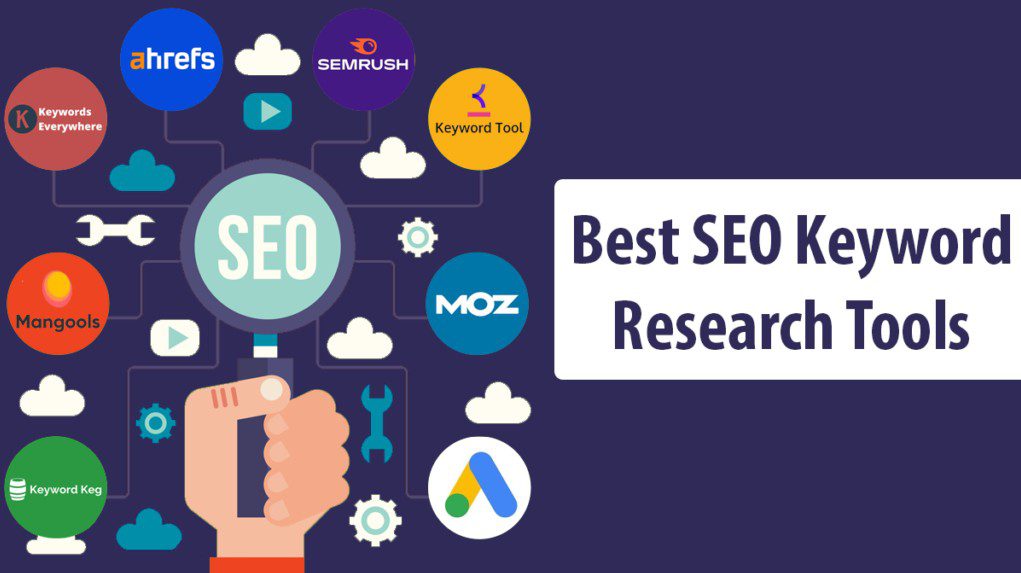
- SEO & GEO Tools: (e.g., Semrush, Ahrefs, Ubersuggest, Google Analytics) for keyword research, site audits, content optimization, and performance tracking. (You can link to your blog post comparing Semrush vs Ahrefs vs Ubersuggest here).
- Content Creation & Management Tools: (e.g., WordPress, Grammarly, various AI writing assistants like those built into ChatGPT or Gemini) for drafting, optimizing, and publishing content.
- Social Media Management Platforms: (e.g., Buffer, Hootsuite) for scheduling and analyzing social media content.
Lorem Ipsum has been the industry’s standard dummy text ever since the 1500s.
5. Measuring the Success of Your Marketing Tactics
Implementing tactics is only half the battle; knowing if they’re working is crucial. Measurement allows for optimization and ensures your efforts are driving ROI.
Key Performance Indicators (KPIs) for Different Tactics:
- Traffic: (e.g., Organic traffic, paid traffic, referral traffic) – crucial for SEO and paid ad tactics.
- Conversion Rates: (e.g., Lead conversion rate, sales conversion rate, email sign-up rate) – vital for lead generation, email, and advertising tactics.
- Engagement Metrics: (e.g., Social media likes/shares/comments, time on page, bounce rate) – important for content marketing and social media tactics.
- Return on Investment (ROI): The ultimate measure of a tactic’s financial effectiveness.
Utilizing Analytics and Reporting Tools:
Regularly check your analytics platforms (e.g., Google Analytics 4, social media insights, ad platform dashboards) to monitor KPIs. Set up custom dashboards to track progress against your goals.
Iterative Optimization:
Marketing is rarely a “set it and forget it” endeavor. Continuously test, analyze, and refine your tactics. A/B testing different ad creatives, landing page layouts, or email subject lines can lead to significant improvements over time. This continuous feedback loop ensures your tactics remain effective.
6. Common Mistakes to Avoid When Deploying Marketing Tactics
Even seasoned marketers can fall victim to common pitfalls. Being aware of these can save you time, money, and effort.
- Lack of Alignment with Strategy: Deploying tactics without a clear strategic reason is like throwing darts blindfolded. Every tactic should directly support a broader strategy.
- Ignoring Data and Analytics: Basing decisions on gut feelings rather than performance data leads to wasted resources. Always track, analyze, and adjust.
- Not Understanding Your Audience: Using tactics that don’t resonate with your target market (e.g., trying to reach Gen Z through direct mail) will yield poor results.
- Being Too Rigid or Too Scattered: Sticking to outdated tactics in a rapidly changing environment, or conversely, trying too many tactics at once without proper focus and resources.
- Forgetting the Human Element in AI-Driven Tactics: While AI offers immense automation and efficiency, authentic connection and understanding your audience’s emotional needs remain paramount. AI should augment, not replace, human creativity and empathy.
Conclusion
Marketing tactics are the indispensable, actionable steps that bring your strategies to life and propel you toward your business goals. From optimizing your website for organic search to leveraging the cutting-edge capabilities of AI and Generative Engine Optimization, the right tactics empower you to connect with your audience and drive meaningful results.
In today’s fast-paced digital landscape, mastering these tactics—and continually adapting them—is not just an advantage; it’s a necessity. By understanding their role, carefully selecting those that align with your objectives, and embracing future-forward approaches like GEO, you can build a robust, effective marketing machine.
Ready to supercharge your marketing efforts?
Explore our other in-depth guides on Best Free SEO Tools with No Limits (2025 Edition),
Generative Engine Optimization (GEO): The Complete 2025 Guide to Ranking in AI Search,
and Semrush vs Ahrefs vs Ubersuggest (2025 Review)
for more insights into the tools and techniques shaping the future of digital marketing!
FAQs Section
Q: What is the primary difference between a marketing strategy and a marketing tactic?
A: A marketing strategy is your high-level plan or approach outlining what you want to achieve and why. A marketing tactic is a specific, actionable step or method that explains how you will execute that strategy to reach your goals. Think of strategy as the blueprint and tactics as the tools and actions needed to build it.
Q: Can a marketing tactic be successful without a clear strategy?
A: While individual tactics might yield isolated, short-term results, true long-term success and scalable growth are unlikely without a clear overarching strategy. Tactics without a strategy are often inefficient and lack direction, leading to wasted resources and inconsistent outcomes.
Q: How do I determine which marketing tactics are best for my business?
A: To choose the best tactics, first, define your specific marketing goals. Then, develop a strategy to achieve them. Next, thoroughly understand your target audience and their behaviors, assess your available resources and budget, and conduct a competitive analysis. Finally, select tactics that align with all these factors.
Q: How often should I review and update my marketing tactics?
A: Marketing tactics should be reviewed regularly, ideally monthly or quarterly, depending on your business cycle and the pace of your industry. The digital marketing landscape, especially with AI advancements, changes rapidly, necessitating continuous monitoring and adaptation of tactics based on performance data and emerging trends.
Q: What role does AI play in modern marketing tactics?
A: AI significantly enhances modern marketing tactics by improving efficiency, personalization, and effectiveness. It powers advanced content creation, automates ad targeting, enables hyper-personalization, provides predictive analytics for better decision-making, and is fundamental to optimizing content for new generative search engines (GEO).